News

100 articles
We 10 June 2026

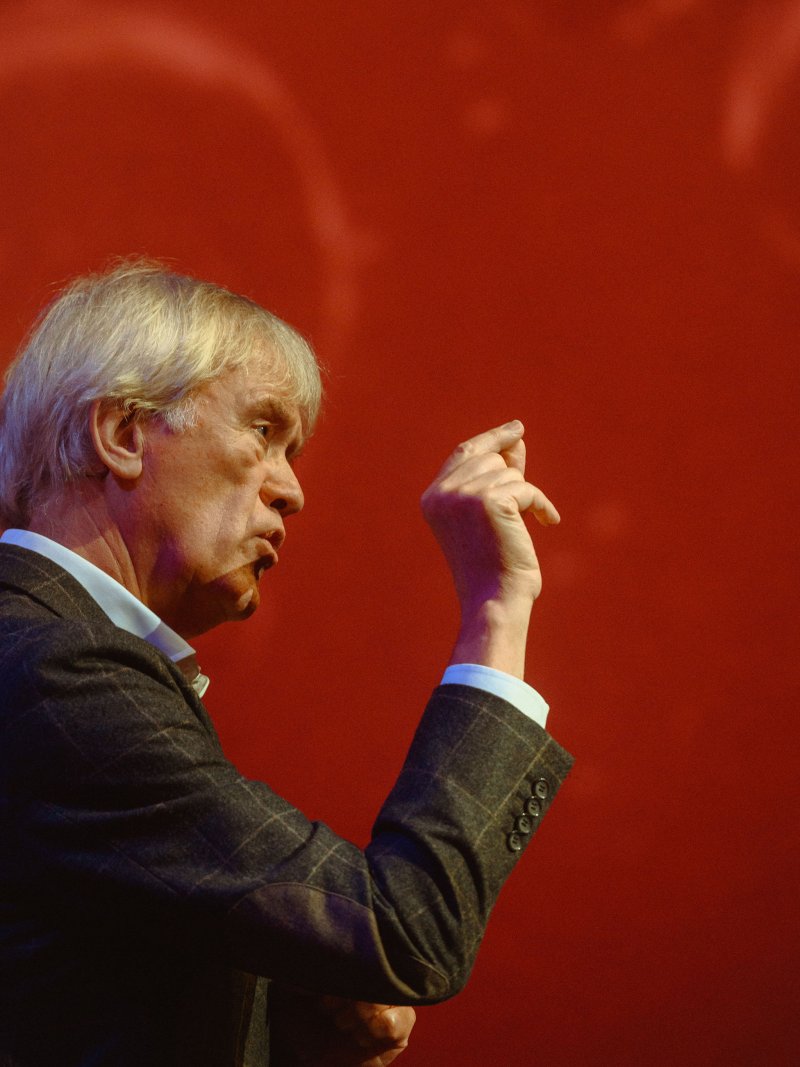
From AI to medical imaging: Ivashchenko and Van der Laan win Ben Feringa Impact Award

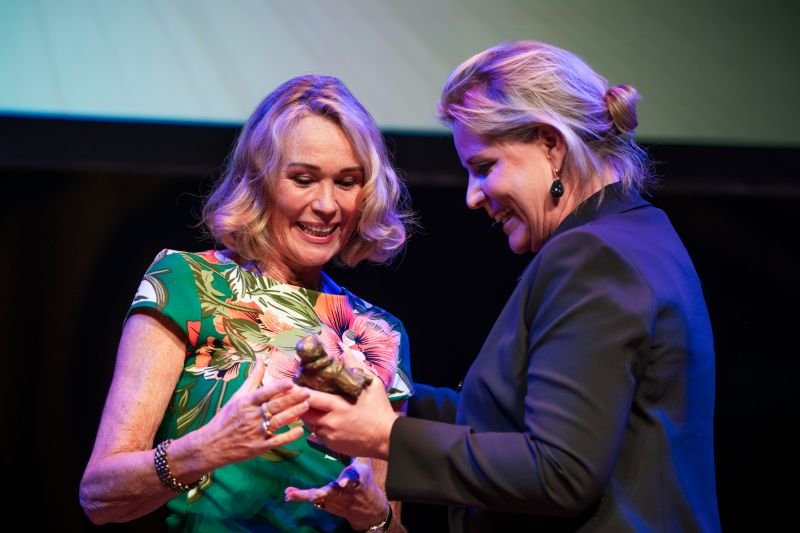
On Tuesday 9 June, the Ben Feringa Impact Award 2026 was presented. The 6th edition of the annual award ceremony took place at Forum Groningen. Sasha Ivashchenko won the award in the researcher category and Thijs van der Laan was presented with the prize in the student category.

Tu 9 June 2026

‘A large cruise ship with a party on every deck.’ Golazo works with regional partners on the future of Marathon Groningen

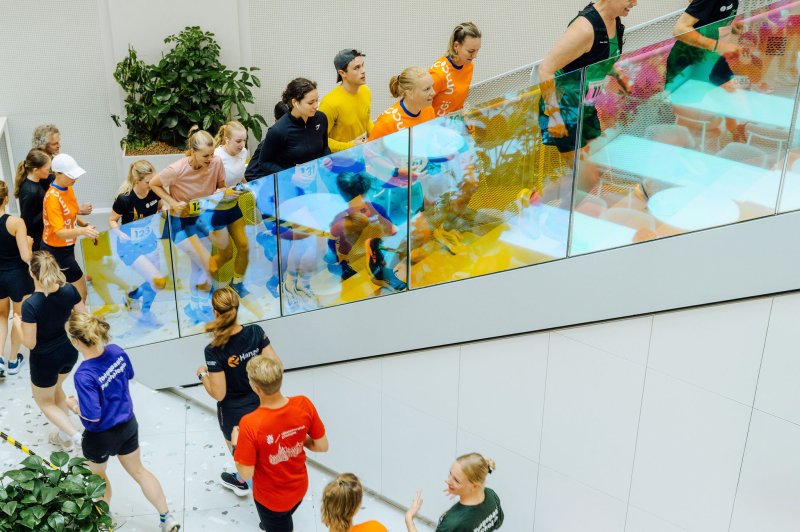
According to Meijer, it was not just the number of participants that spelled success, but especially the way the event was experienced. "Everything fell into place. We had a beautiful route, many dedicated volunteers, and enthusiastic participants. The feedback afterwards was incredibly positive. That makes you proud." Interest in the marathon proved to be massive. Registration was initially capped at 2,500 participants, but after a rapid growth of the waiting list, the maximum was increased. Ultimately, nearly 2,700 marathon runners lined up at the start. Together with the participants of the half marathon, 10 kilometers, and the kids run, the event grew to over 12,000 participants.Platform for ambitions During the Marathon Groningen powered by Campus Groningen, various regional partners and Golazo signed a letter of intent to jointly develop the event further over the coming years. Regarding that shared ambition, Meijer says: "Golazo literally gets people moving, but the true strength of an event lies in everything that is created around it. A marathon can serve as a platform where many different ambitions converge." He compares the event to a large cruise ship. "The marathon is the ship that all kinds of parties sail on together. Something different is happening on every deck, but everyone is steering the same course. The event forms the foundation that other initiatives can connect to." It is precisely there that Meijer sees opportunities for Groningen. According to him, themes like health, talent development, regional pride, and social engagement align perfectly with the power of the event. Meijer believes that Campus Groningen plays an important connecting role in this. "Through the partners of Campus Groningen, you immediately reach the core of many key players in the city. There lie enormous opportunities to connect the various existing ambitions to Marathon Groningen as a platform."Organic growth For the coming years, Golazo deliberately chooses a gradual and sustainable development of Marathon Groningen. "We believe in organic growth," Meijer says. "First, the foundation needs to be solid. That is now in place. Next, you look at how you can build upon that year after year." According to him, this growth is not just about participant numbers, but also about involvement from the region. For instance, he sees opportunities to connect more companies to the event and to further increase local support in the city. "Ultimately, we want Marathon Groningen, just like the 4 Mijl, to earn a permanent spot in people's calendars. An event of which you know: that belongs to Groningen." In addition, Golazo hopes to work towards a stable date on the event calendar in the coming years and a further growth in the number of participants, without compromising on the quality of the event.An event for recreational athletes Although the full marathon was on the program for the first time this year, Golazo emphatically looks at the event as a whole. Besides the marathon, the half marathon, the 10 kilometers, and the kids run also drew thousands of participants to Groningen. "When you look at the total picture, you see that the largest participant numbers are actually in the shorter distances. That is true for many cities. That is why we look at the impact of the entire event," Meijer says. The ambition is therefore not to compete with major international marathons like Rotterdam or Amsterdam, but to be an attractive running event for recreational athletes from Groningen and far beyond. "It needs to be an event people love to visit because they have a connection to Groningen, studied here, or simply want to run a beautiful route. That is where our strength lies." After a successful second edition of the running event—and the first one featuring a full marathon—Golazo is primarily looking ahead. One thing is already certain, according to Meijer: "Marathon Groningen will return. We are incredibly happy with what we have built together with all the partners, and we are now looking toward the next step." Source: Campus Groningen (author Marlies Schipperheijn). Photo: Johan Meijer

Mo 8 June 2026

Hanze Achieves European First with Earthquake Test of Timber Building

A European first at Hanze: a five-storey timber building was digitally tested for earthquake resilience. On 8 May, different parts of the building, including floors and walls, were tested simultaneously at facilities in the Netherlands, the United Kingdom and Greece. Through a digital connection, all test sites operated as one integrated system, allowing researchers to measure the behaviour of the entire building. Vibrations affecting one component immediately influenced all other components within the digital model. Until now, earthquake testing has often been carried out separately. One team would analyse the effect on a wall, while another focused on the floor. However, these components interact with one another, meaning separate tests cannot capture the full picture. The Hysteresis project addresses this challenge.Bringing everything together For the first time, measurement data from a complex building were combined in real time from multiple locations, as if the structure were being tested as a single unit. No European testing facility currently has the equipment needed to analyse an entire building under earthquake conditions. By virtually linking leading facilities through advanced software, researchers created a distributed testing environment capable of doing exactly that. From Groningen’s BuildinG facility, researchers Ihsan Bal, Eleni Smyrou and Kamer Ozdemir coordinated the live simulation. In Patras, Greece, damping elements were tested, while in Bristol, UK, timber walls were subjected to earthquake simulations on sandy soil conditions. The resulting reaction forces travelled back to Groningen within milliseconds, where the algorithm continuously adjusted its calculations. “We hope this test will help engineers gain greater confidence in these systems,” says Bal. “We also want to discover how they can be designed more efficiently.”Timber instead of concrete The choice of timber is deliberate. Concrete is responsible for an estimated 5–8% of global CO₂ emissions, while timber stores carbon and is significantly less resource-intensive to produce and transport. However, wider adoption of timber in multi-storey construction requires improved technical guidelines. In the absence of such guidance, builders often rely on heavy concrete foundations that may not always be necessary. This experiment provides data that could help change that.Relevance for the Groningen region The findings are directly relevant to the Groningen region. The project improves understanding of how earthquakes affect individual building components, such as floors and walls, and how these components interact. This knowledge can support better assessment and strengthening of existing buildings, while also informing the design of new timber structures. “It is a long-term investment by Hanze to carry out earthquake-resilience research here in the region. I am proud that we have been able to make this happen,” Bal concludes. Source: hanze.nl

Th 4 June 2026

ROAM Wins European Circular Economy Award

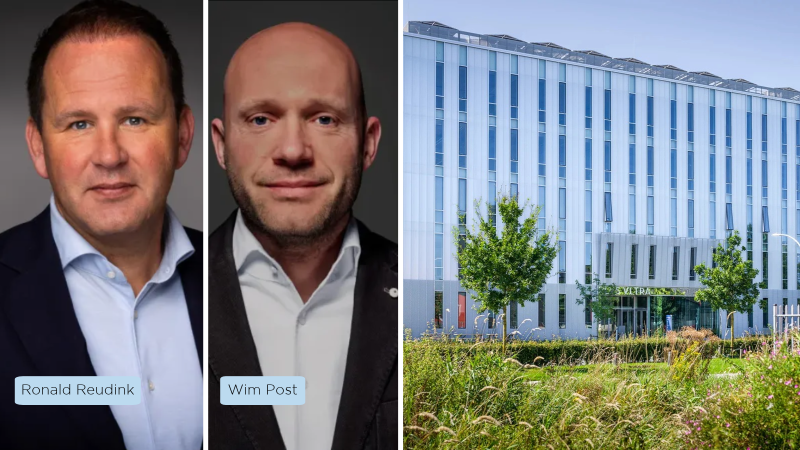
The ROAM Paviljon on Zernike Campus wins the EDA Circular Economy in Construction Award.

Mo 1 June 2026

Groningen Expresses Shared Ambition for the Future of Marathon Groningen

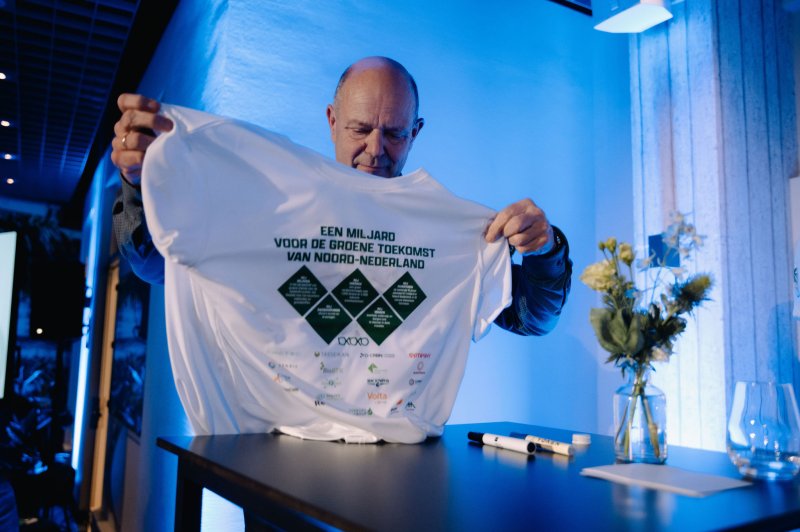
In Groningen, we do not wait for others to lead the way. Progress happens here because people are given the space to experiment, collaborate, and take initiative. Marathon Groningen is a visible expression of that spirit: a milestone within a much longer journey that Groningen takes every day. “Marathon Groningen is much more than a running event. Just as we do through our partnerships in elite sports, this platform allows us to showcase what Groningen stands for: innovation, energy, and connection. It perfectly reflects how we want people to experience our city and region,” says Jan Hugo Nuijt of Groningen & Partners.Growing a Movement With more than 12,500 participants, Groningen celebrated a successful marathon edition in which sport and region came together in a powerful way. Thousands of runners and visitors gathered for a day dedicated to movement, connection, and community. Edward van der Meer, Director of Campus Groningen, said: “What we witnessed on Sunday was much bigger than a sporting event. The energy throughout the city, the thousands of people coming together in motion, and the collaboration between so many partners perfectly demonstrate what Groningen stands for. Today, we are expressing our ambition to continue growing that momentum together. Not only through sport, but also through talent development, health, innovation, and regional pride, with Marathon Groningen serving as a catalyst.”Building the Future Together During the gathering at the finish line, the participating organizations expressed their ambition to further develop Marathon Groningen between 2026 and 2028 as a regional platform with both societal and economic impact. Representatives from Groningen & Partners, Campus Groningen, UMCG, the University of Groningen, Hanze University of Applied Sciences, the Municipality of Groningen, the Province of Groningen, NV NOM, and Business Association WEST were present at the occasion. Through this collaboration, the partners aim to strengthen the visibility and attractiveness of Groningen as an innovative, healthy, and connected region.

Th 28 May 2026

European collaboration for circular chemistry: ChainCraft launches PACE project

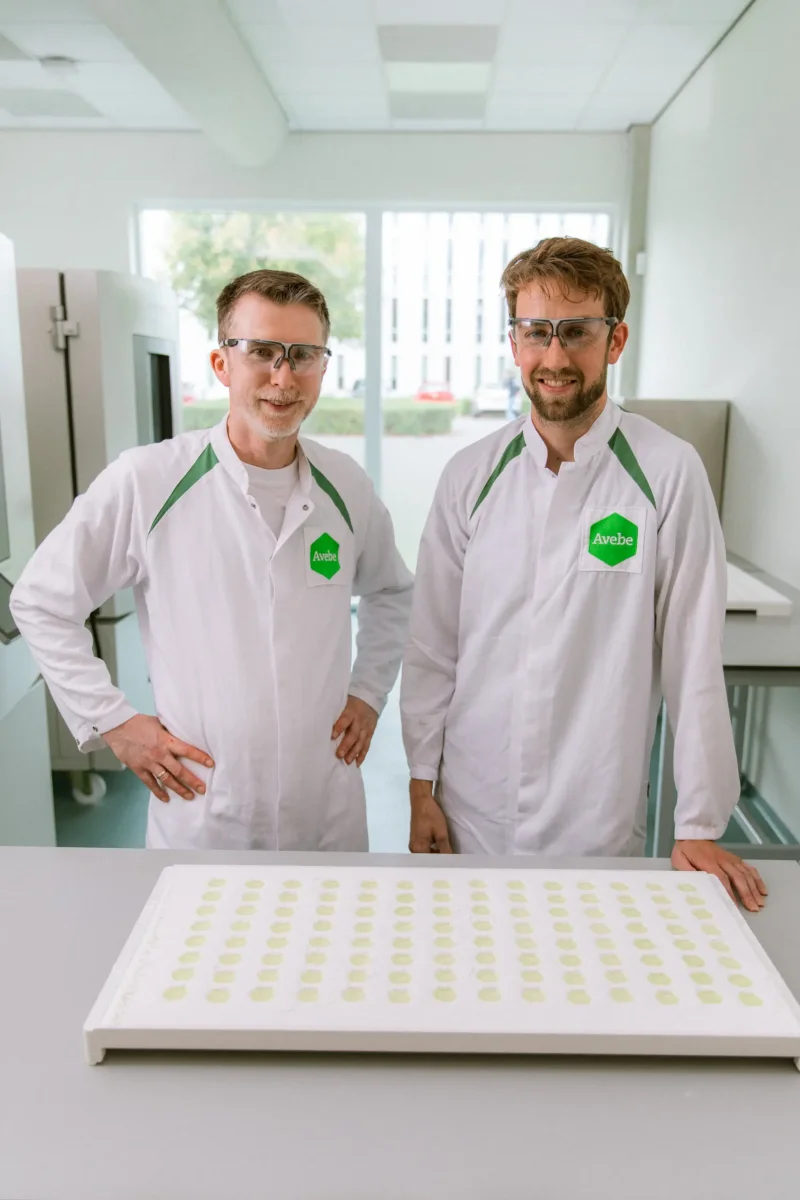
ChainCraft launches European PACE project to scale circular chemistry through industrial biorefinery integration. ChainCraft is proud to launch the PACE project, a European initiative advancing the circular biobased economy. Supported by the Circular Bio-based Europe Joint Undertaking (CBE JU), the project brings together industrial and innovation partners across the value chain to accelerate the industrial deployment of sustainable medium-chain fatty acids (MCFAs). As part of the project, PACE will demonstrate a first-of-its-kind flagship biorefinery by retrofitting part of Royal Avebe ’ s existing production facility. Using advanced fermentation and microbial chain elongation, the facility will convert potato juice side-streams into valuable biobased MCFAs for applications across the chemical industry. The project represents an important step toward reducing Europe’s dependency on fossil and palm oil-based chemistry while strengthening local, circular value chains. By integrating circular solutions into existing industrial infrastructure, PACE demonstrates how industrial side-streams can be transformed into scalable and commercially relevant chemical building blocks. PACE aims to produce up to 20,000 tonnes of purified MCFAs annually from approximately 300,000 tonnes of potato juice, while significantly improving resource efficiency through wastewater reuse and reduced transport emissions. Compared to conventional fossil and palm-based alternatives, the biobased MCFAs are expected to reduce greenhouse gas emissions by 50–80%, enabling the chemical industry to decarbonize its value chain. “PACE demonstrates how circular chemistry can become part of existing industrial systems at meaningful scale, ” says Niels van Stralen, founder and Chief Growth Officer of ChainCraft. “By upgrading infrastructure that already exists and using locally available side-streams, we show that sustainable chemistry does not have to start from scratch. This project is an important example of how Europe can build more resilient and circular chemical value chains. ” The involvement of downstream partners such as Syensqo, Symrise AG and SC Johnson highlights the growing industrial interest in circular and biobased alternatives to conventional chemistry. Together with partners across the value chain, PACE aims to accelerate market adoption and commercial scale-up of biobased fatty acids, while strengthening Europe ’ s position as a pioneer in deforestation-free and import-independent chemical production. Meer informatie: www.chaincraft.com

Mo 11 May 2026

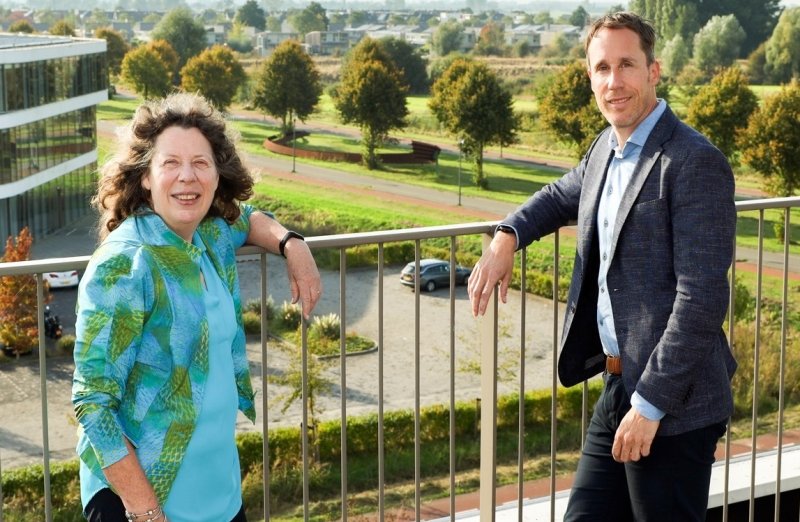
KNAW appoints Jacquelien Scherpen en Lude Franke as new members

Professors Jacquelien Scherpen (who is also University of Groningen Rector Magnificus) and Lude Franke (UMCG) have been appointed members by the Royal Netherlands Academy of Arts and Sciences (KNAW). The KNAW elected 16 new members. The approximately 600 members of the KNAW are leading scientists from all disciplines. Membership is for life.About the research of Jacquelien Scherpen Jacquelien Scherpen is Professor of Systems and Control at the Faculty of Science and Engineering and Rector Magnificus of the UG. Her research applies to all kinds of technical systems, from controlling robots to regulating smart energy systems. Scherpen made significant contributions to the mathematics of balancing models for ‘non-linear control systems’, such as a thermostat linked to a heating system, thereby reducing their complexity. It is noteworthy that she also collaborated interdisciplinarily with behavioural scientists and economists to incorporate human factors. Scherpen speaks out publicly on science, technology and the development of talent. As a woman in a technical, male-dominated field, Scherpen fulfils her role as a role model with vigour.About the research of Lude Franke Lude Franke is Professor of Functional Genomics at the University Medical Center Groningen (UMCG). Lude Franke investigates non-coding DNA, genome sequences that are not transcribed into proteins and shed light on how cells and organisms function, and also opened up new avenues for the development of novel drugs. During the covid-19 outbreak, Franke developed the Corona Barometer, which helped us understand how the pandemic was unfolding. In addition, Franke has played a leading role in developing real-world applications for new discoveries, such as an affordable pharmacogenetic passport that predicts a patient's response to certain drugs. Franke also has a gift for visualising his research, and has won several awards for his graphic design work. Source: rug.nl

Th 7 May 2026

UG leads national consortium for energy-efficient ‘brain-inspired computers’ with €9 million NWO grant

€9M NWO grant positions the Netherlands to lead next-generation brain-inspired computing The Netherlands is taking a major step toward energy-efficient computing with a €9 million grant from the NWO Knowledge and Innovation Covenant (KIC) Long-Term Programme, awarded to the ”10X-Factor(y): Towards a Dutch ecosystem for neuromorphic technologies“ project. The project is managed by UG researchers affiliated with CogniGron, a research hub that develops highly energy-efficient supercomputers. In total, the project will manage a total budget of 30 million euros, coming mainly from companies and private funders. 10x-Factor(y) will establish a national ecosystem for neuromorphic technologies: an emerging field that designs novel types of computing systems, inspired by the data processing principles of the brain. By bringing together leading research institutions, companies and universities, the initiative seeks to accelerate the development of next-generation computing systems that are orders of magnitude more energy-efficient than current solutions and enable real-time processing. CogniGron at the University of Groningen will lead the consortium in collaboration with partners including TNO, Eindhoven University of Technology, University of Twente, TU Delft, Radboud University, and Astron, and a range of high-tech companies such as Infineon, Innatera, Snap inc, Synopsys, Batenburg Beenen, Sencure, IMChip, Oxford Instruments, and OPT/NET. Together, they will work across the full innovation chain, from advanced materials, devices and chip design to system integration and applications. The aim is to lower the threshold to adopt neuromorphic technologies for real-world solutions. To this end, the program is designed around 7 demonstrators representing 7 use cases ranging from automation & robots, health monitoring & diagnostics to field sensors. 10x-Factor(y) will have the critical mass for realising these demonstrators and lay the basis for bringing such novel technologies to market. Working on the upcoming challenges within a 10-years project is a unique opportunity. “Neuromorphic technologies are already in the market, with Dutch companies leading in Europe. However, to penetrate the global user market, they must become a reliable, affordable, easy-to-integrate solution that solves urgent problems. 10x-Factor(y) aims to build that bridge” explains Beatriz Noheda, 10x-Factor(y) main principal investigator. A researcher working in the CogniGron labFuture-proof computing inspired by the brain Modern computing faces a critical sustainability challenge. Artificial intelligence (AI) is driving energy demand to levels that already limit the capacity of data centres and challenge the power grid. It also hinders the use of AI at places where power is limited, as health sensors or devices in remote locations. Instead, data is communicated into the cloud, resulting in severe privacy issues. These issues cannot be tackled with incremental changes but requires different computing paradigms like neuromorphic computing, which takes inspiration from the extreme energy efficiency of brains for information processing. This approach consists of using one or more of the principles used by the brain: use of analogue signals, implementation of asynchronous (event-based) processing, communication and information encoding via spikes and bringing the processor closer to the memory.An ecosystem for research, education and industry The KIC targets programs that address societal challenges faced by the Netherlands. The results should contribute to realizing economic opportunities and, thus, private investment is crucial. KIC-LTP programmes are expected to lead to long-term and sustainable innovations. The Netherlands is uniquely positioned to lead the neuromorphic computing revolution: It is one of the few countries with expertise spanning the entire neuromorphic value chain, supported by existing initiatives such as NL-ECO, Mission 10x , and the newly formed NC-NL alliance and national research programmes in AI, computing, photonics and semiconductors. The 10X-Factor(y) program builds on this foundation by integrating fragmented efforts into a coordinated, industry-driven ecosystem. 10x-Factor(y) will form an integrated community linking industry with research and education. In the span of ten years, it will develop prototypes, train new experts, and test real life applications. With shared infrastructure, co-design platforms, and responsible innovation frameworks, the programme will establish the Netherlands as a global leader in sustainable, energy-efficient neuromorphic computing. The Board of the University reacts to the news: “We are very proud that NWO will invest in neuromorphic computing, which started with the Cognigron centre in Groningen. This institute was made possible by a gift of the Ubbo Emmius Fund. The grant is an important boost for research into energy-efficient AI, which is urgent for today’s society.”About CogniGron Groningen Cognitive Systems and Materials Center (CogniGron) is a leading multidisciplinary research center at the University of Groningen for research and development on neuromorphic computing. CogniGron was founded on a large gift from the Ubbo Emmius Foundation. Source: rug.nl