News

77 articles
Mo 9 February 2026

“At the Healthy Ageing Campus, we can switch gears quickly.”

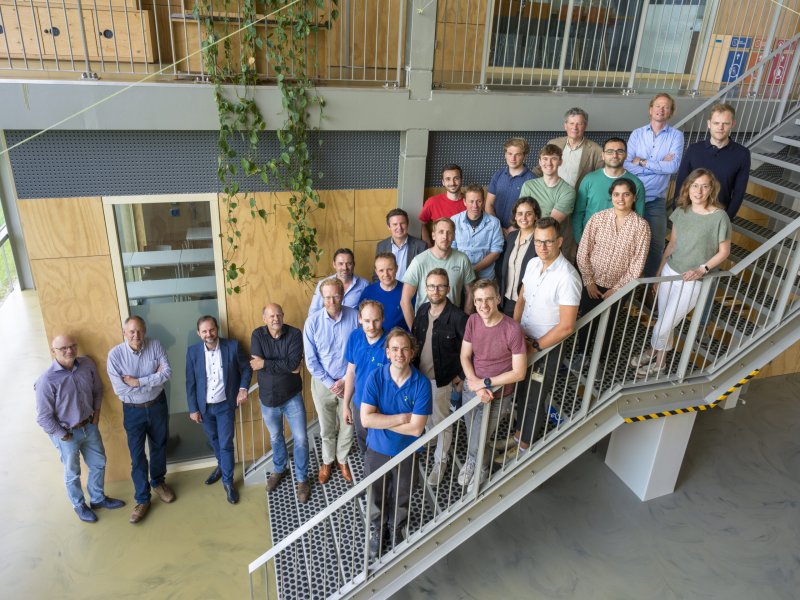
Bart-Jan Korteling is COO at Innocore Pharmaceuticals, a company based at the Healthy Ageing Campus in Groningen that develops long-acting medical injections. “Our mission is to make patients less dependent on daily pills and to guarantee stable medication delivery,” he explains. But his work goes beyond medication alone: it also revolves around collaboration with knowledge institutions and other companies. The choice for the Healthy Ageing Campus was obvious. “We started out as a spin-off from a technology platform with knowledge about biodegradable polymers,” Bart-Jan explains. “With knowledge institutions and the UMCG nearby, we can quickly switch gears and collaborate with companies such as Polyvation and Symeres.” The proximity of expertise and young talent also plays a role in this: interns and graduates often take their first career steps at Innocore. According to Bart-Jan, the campus functions as an innovative ecosystem. “It's a flywheel effect: companies, knowledge institutions, and students set each other in motion. Once there is movement, the wheel just keeps turning faster.” Bart-Jan considers the LIFE Cooperative, the northern partnership for companies in the life sciences, to be an important pillar in this regard. “This allows us to really learn from each other, for example about talent development and training or about regulations and quality.” Bart-Jan also sees challenges on campus. “We strengthen each other, but we have to be careful not to get in each other's way. Retaining talent in the north is also difficult: many people eventually leave for other regions for their careers.” With around 35 employees and ambitious growth plans, Innocore sees the Healthy Ageing Campus as a place where innovation, knowledge, and talent come together. “There is a lot of potential in the north, but it doesn't happen by itself. You have to keep coordinating, pooling resources, and paying attention to where strengths reinforce or block each other.”

We 4 February 2026

QT Sense on Campus Groningen raises 4 million

Great news for Campus resident QT Sense! The Groningen biotech startup QT Sense has raised 4 million euros for the further development of its quantum sensing technology. (Article via Dagblad van het Noorden). Read more in Dutch. De spin-out van het Universitair Medisch Centrum Groningen (UMCG) spoort aandoeningen sneller op en kan real-time de effectiviteit van geneesmiddelen zien. Dat kan door in cellen te kijken zonder ze kapot te maken. Het is iets wat alleen QT Sense kan en daarmee heeft het jonge bedrijf de sleutels in handen om de geneeskunde serieus vooruit te helpen. De gepatenteerde technologie spoort zogeheten vrije radicalen in cellen op, moleculen die wijzen op een aandoening. Dat helpt medici en onderzoekers in hun zoektocht naar de oorzaak van ziektes. Het is ook een uitkomst voor ontwikkelaars van geneesmiddelen, die direct zien of nieuwe stoffen effectief zijn. Zo worden vrije radicalen in sommige therapieën tegen kanker ingezet om kwaadaardige cellen aan te vallen. Vanwege de grote voordelen voor de farmaceutische industrie zijn de groeikansen voor de Groningse startup groot. Niet voor niets noemde expert Tjarda Polderman (Founded) de startup onlangs ‘de grootste kanshebber om de nieuwe Noordelijke Unicorn (onderneming met een waardering van meer dan een miljard dollar, red) te worden’. Lees het hele artikel via: https://dvhn.nl/economie/start-up-groningen-haalt-4-miljoen-aan-groeigeld-op.-qt-sense-spoort-aandoeningen-sneller-op-48423899.html

Tu 3 February 2026

AI in the operating room: Future Tech Ventures invests in SPCTR for real-time margin analysis in oncological surgery

Future Tech Ventures (FTV) is investing in Dutch medtech startup SPCTR, which is developing a real-time AI device to assess tumor margins during surgery. This enables surgeons to immediately determine whether a tumor has been completely removed, helping to prevent repeat surgeries and additional treatments while improving the quality of care. Initially, the technology is focused on breast cancer. The investment coincides with a major clinical milestone: the inclusion of the first patient in the SPCTR-I study at the Breast Center Groningen. In addition, UMC Utrecht (UMCU) is a second inclusion site for this study. “The problem in oncological surgery is that it often takes days to determine whether a tumor has been completely removed. With our device, the surgeon can assess during the operation whether there is sufficient healthy tissue surrounding the tumor,” says Rowan Timmermans, CTO and co-founder of SPCTR. The device operates using light and imaging and employs an AI model that creates an “optical fingerprint” of the tissue. Unlike existing solutions, no additional healthcare staff—such as a pathologist or radiologist—are required for interpretation in the operating room, and no contrast agents or other substances need to be injected. With this, SPCTR introduces a completely new, non-invasive method of intraoperative margin analysis.From validation to market launch FTV’s investment will be used over the coming months to further develop the startup, which was founded in March 2025. Wido Heeman, CEO and founder of SPCTR, explains: “We are using this investment from FTV for three core activities: clinical validation of prototypes, certification of the device, and preparing it for market launch.”The start of the SPCTR-I study last week, with the first patient enrolled at the Breast Center Groningen and parallel inclusion at UMC Utrecht (UMCU), marks the transition from preclinical development to actual application in clinical practice. In addition to FTV, a number of angel investors are participating in this funding round.The power of simplicity Hilbrand van der Zee, investment manager at FTV, says: “We are investing in SPCTR with confidence. The strength of this innovation lies in its simplicity: a proven technique in a new form, combined with AI. The team connects clinical expertise with advanced technology, exactly the kind of innovation we like to accelerate.” “The most important thing is the trust we receive from investors, surgeons, and patients,” Timmermans and Heeman emphasize. “The first patient data shows that this technology is ready for the next step: clinical impact in hospitals!”Ambitions The SPCTR team consists of seven people, including two interns, combining clinical experience with AI and software expertise. In the coming years, the team aims to implement the technology in multiple hospitals and expand to other solid tumors. “Our goal is to prevent as many repeat surgeries as possible and improve the quality of treatment for patients. We will start in Europe and then expand to the US and other regions,” says Heeman.Van validatie tot marktintroductie De investering van FTV zal de komende maanden gebruikt worden om de startup, opgericht in maart 2025, verder te ontwikkelen. Wido Heeman, CEO en founder van SPCTR: “We gebruiken deze investering van FTV voor drie kernactiviteiten: klinische validatie van prototypes, certificering van het apparaat en het productieklaar maken voor marktintroductie.” De start van de SPCTR-I studie vorige week, met de eerste geïncludeerde patiënt in het Borstcentrum Groningen en parallelle inclusie in het UMCU, markeert de overgang van preklinische ontwikkeling naar daadwerkelijke toepassing in de klinische praktijk. Naast FTV participeren een aantal angel-investeerders in deze investeringsronde.De kracht van eenvoud Hilbrand van der Zee, investeringsmanager van FTV: "We investeren met vertrouwen in SPCTR. De kracht van deze innovatie zit in de eenvoud: een beproefde techniek in een nieuwe jas, gecombineerd met AI. Het team koppelt klinische expertise aan geavanceerde technologie, precies het soort innovatie dat wij graag versnellen." "Het belangrijkste is het vertrouwen dat we krijgen van investeerders, chirurgen en patiënten," benadrukken Timmermans en Heeman. “De eerste patiënt data laat zien dat deze technologie klaar is voor de volgende stap: klinische impact in ziekenhuizen!”Ambities Het SPCTR-team bestaat uit zeven personen, inclusief twee stagiaires, met een mix van klinische ervaring en AI- en software-expertise. In de komende jaren wil het team de technologie in meerdere ziekenhuizen implementeren en uitbreiden naar andere solide tumoren. "Ons doel is zoveel mogelijk heroperaties te voorkomen en de behandelkwaliteit voor patiënten te verbeteren. We beginnen in Europa en breiden daarna uit naar de VS en andere regio's," aldus Heeman.Artikel: Future Tech VenturesAfbeelding: Casper Maas

Tu 3 February 2026

Sabiad makes implant infections visible. Campus Groningen company accelerates diagnosis and treatment

Faster diagnostics for infected hip and knee prostheses can make the difference between recovery and months of debilitating treatment. Sabiad is developing technology that makes bacterial infections visible and, in the future, may even enable their targeted destruction. “With implant infections, everything revolves around time,” says Saskia van den Dool, co-founder and COO of Sabiad. “Once a biofilm forms on the implant, the chances of successful treatment rapidly decrease.” Bacterial infections around joint implants are among the most persistent complications in orthopedics. Every year, thousands of patients develop infections following hip or knee surgery—conditions that are difficult to diagnose and even harder to treat. Sabiad, a spin-off from the University Medical Center Groningen (UMCG) building on the research of Prof. Dr. Jan Maarten van Dijl, aims to change this. The company is developing innovative diagnostic and therapeutic applications based on one core technology: an antibody that binds with extremely high specificity to Staphylococcus aureus, one of the main causes of implant infections. In early 2026, the company relocated from Friesland to the Healthy Ageing Campus in Groningen.From Oncology to Infectious Diseases Sabiad’s roots partly lie in oncology. Co-founder Ton van den Hoven was previously involved in SurgVision, a successful UMCG spin-off that used fluorescent tracers to visualize tumor margins during surgery. “In oncology, tracer technology has taken off enormously in recent years,” says Van den Dool. “What we are doing is translating that concept to bacterial imaging.” Personal experience also played a role. A few years ago, Van den Hoven survived a severe bacterial infection that resulted in ten days in intensive care and months of hospitalization. “Then you truly understand how life-threatening and disruptive such an infection can be,” Van den Dool says. “That sense of urgency is deeply embedded in this company.”Gaining Time Is Crucial The core problem with implant infections is time. Current standard diagnostics rely on bacterial cultures, which take two to five days. During that period, patients are often already treated with broad-spectrum antibiotics, without knowing exactly which bacterium is responsible. “And it’s precisely in those first days that a biofilm can develop,” Van den Dool explains. “After four or five days, the chance of success is already significantly lower.” Sabiad is therefore developing a diagnostic test based on joint fluid (synovial fluid) that is performed outside the body. “You can compare it to a COVID test,” Van den Dool explains. “You take a small sample of fluid, mix it with our test, and get a rapid answer. That allows you to win those crucial days.” This so-called ex vivo test has a relatively short regulatory pathway and, according to current planning, could reach the market around 2028–2029.Imaging and Therapy In addition, Sabiad is working on a tracer that can be administered directly to the patient. This tracer binds specifically to Staphylococcus aureus and makes the bacteria visible during imaging. “If you can make something visible, you can in principle also attach something to it,” says Van den Dool. “For example, a therapeutic component.” Preclinical research shows that the same antibody technology can be used to selectively destroy bacteria, for instance via photodynamic therapy (targeted killing of bacteria using light) or radioactive isotopes (elements that emit radiation, used for diagnosis or treatment). This trajectory is still at an early stage and requires lengthy clinical studies. Commercial application is therefore not expected until the next decade.International Interest Interest from the medical community is strong, Van den Dool notes. In the Northern Netherlands, Sabiad collaborates with the Northern Infection Network for Joint Arthroplasty (NINJA), a consortium of top clinical hospitals working together on joint infections. Internationally, the company is also gaining traction, with preclinical collaborations including UCLA and recent discussions with major U.S. hospitals. “This problem exists everywhere,” Van den Dool says. “We are aging, we receive more implants, and antibiotic resistance is increasing. Everyone in healthcare sees that this situation is not sustainable.”Close to the Ecosystem Sabiad’s choice for the Healthy Ageing Campus in Groningen, directly opposite UMCG, was a deliberate one, according to Van den Dool. “Our clinical studies, microbiological expertise, and orthopedic collaborations are all here. Then you want to be physically close. That’s why the first phase-zero study will start this year at UMCG, under the supervision of Professor Paul Jutten from Orthopedics,” Van den Dool explains. Within five to ten years, Sabiad expects to become part of a larger medtech or pharmaceutical company. “Our role is to bring the technology through phase two clinical trials,” says Van den Dool. “After that, scale is needed to truly deliver this innovation to patients worldwide.” The societal impact could be significant: fewer revision surgeries, faster recovery, lower healthcare costs, and more targeted use of antibiotics. “Everyone knows someone with an infected prosthesis,” Van den Dool says. “If we can contribute to a faster, better approach, then we are truly making a difference.” Article: Campus Groningen (author Marlies Schipperheijn)Photo: Saskia van den Dool

Future Tech Ventures investeert in ModAlgae voor duurzame doorbraak in personal care
Tu 20 January 2026

Future Tech Ventures invests in ModAlgae for a sustainable breakthrough in personal care

Future Tech Ventures has invested in ModAlgae, a spin-off of the University of Groningen and Zernike campusresident, that is developing an innovative, biobased ingredient derived from microalgae. With this investment, ModAlgae will be able to scale up its operations and move toward the market introduction of a new type of glycogen for the personal care industry, which demonstrably provides superior skin hydration compared to existing ingredients.

Groningse studenten brengen 200 jaar aardappelzetmeel tot leven; boekpresentatie tijdens Campus Café
Th 8 January 2026

Groninger students bring 200 years of potato starch to life; book presentation during Campus Café

The potato may seem like a simple crop, but behind Groningen's potato starch industry lies a history full of innovation and unexpected developments. Four history students from the University of Groningen delved into that story and discovered how a regional industry grew into an innovative player with international significance.

PET-CT-scan UMCG
Tu 6 January 2026

UMCG investigates whether using a PET-CT scan in the operating room can prevent cancer reoperations.

The UMCG, located on the Healthy Ageing Campus, is the first hospital in the Netherlands to start a clinical study in which surgeons can immediately check during an operation whether a tumor has been completely removed. This is done using a mobile PET-CT scanner that scans the removed tissue directly in the operating room.

UMCG-operatiecentrum
Th 18 December 2025

This is where tomorrow's surgical care takes shape

A brand-new operating centre is being built in the middle of the UMCG, on the Healthy Ageing Campus. While renovations are underway inside, operations must of course continue as usual.

Campus Groningen viert groei en samenwerking tijdens kerstbijeenkomst in het Avebe Innovatiecentrum
Tu 16 December 2025

Campus Groningen celebrates growth and collaboration at Christmas gathering at the Avebe Innovation Center

Campus Groningen wrapped up the year in true Christmas spirit during Campus Café – The Christmas Edition. On Tuesday 16 December, the community came together to connect, look ahead and, above all, celebrate what has been built within the campus ecosystem over the past year.