On this page, you can read the latest news from and about the campus: stories about partnerships, new projects, companies and initiatives on and around the campus.
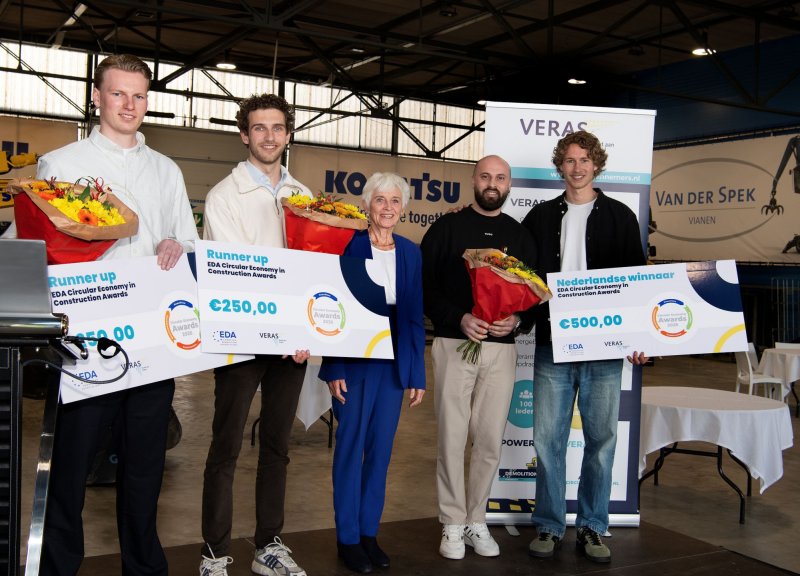
The ROAM Paviljon on Zernike Campus wins the EDA Circular Economy in Construction Award.
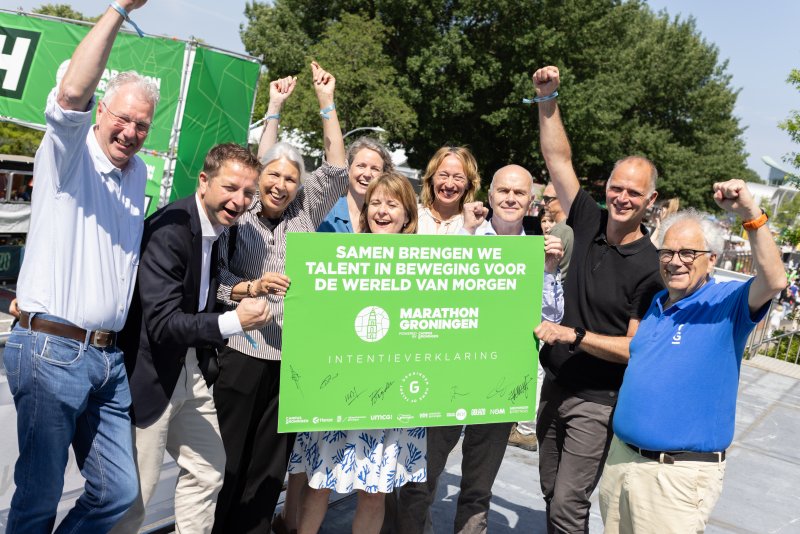
In Groningen, we do not wait for others to lead the way. Progress happens here because people are given the space to experiment, collaborate, and take initiative. Marathon Groningen is a visible expression of that spirit: a milestone within a much longer journey that Groningen takes every day. “Marathon Groningen is much more than a running event. Just as we do through our partnerships in elite sports, this platform allows us to showcase what Groningen stands for: innovation, energy, and connection. It perfectly reflects how we want people to experience our city and region,” says Jan Hugo Nuijt of Groningen & Partners.Growing a Movement With more than 12,500 participants, Groningen celebrated a successful marathon edition in which sport and region came together in a powerful way. Thousands of runners and visitors gathered for a day dedicated to movement, connection, and community. Edward van der Meer, Director of Campus Groningen, said: “What we witnessed on Sunday was much bigger than a sporting event. The energy throughout the city, the thousands of people coming together in motion, and the collaboration between so many partners perfectly demonstrate what Groningen stands for. Today, we are expressing our ambition to continue growing that momentum together. Not only through sport, but also through talent development, health, innovation, and regional pride, with Marathon Groningen serving as a catalyst.”Building the Future Together During the gathering at the finish line, the participating organizations expressed their ambition to further develop Marathon Groningen between 2026 and 2028 as a regional platform with both societal and economic impact. Representatives from Groningen & Partners, Campus Groningen, UMCG, the University of Groningen, Hanze University of Applied Sciences, the Municipality of Groningen, the Province of Groningen, NV NOM, and Business Association WEST were present at the occasion. Through this collaboration, the partners aim to strengthen the visibility and attractiveness of Groningen as an innovative, healthy, and connected region.
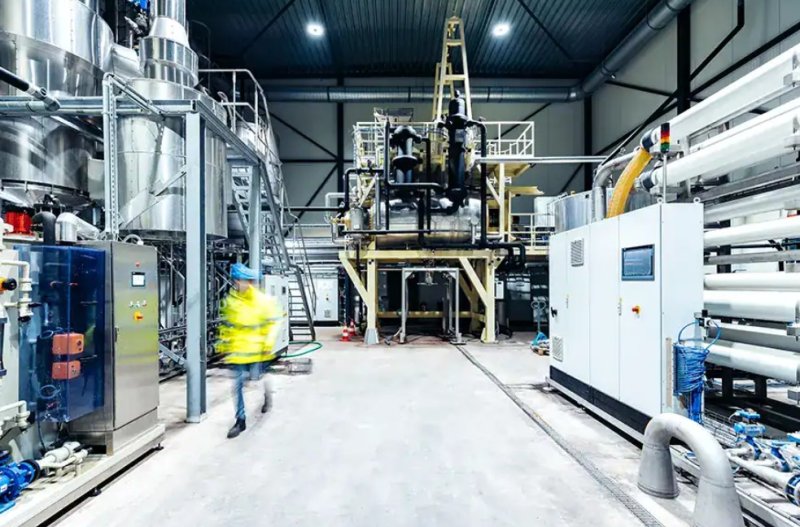
ChainCraft launches European PACE project to scale circular chemistry through industrial biorefinery integration. ChainCraft is proud to launch the PACE project, a European initiative advancing the circular biobased economy. Supported by the Circular Bio-based Europe Joint Undertaking (CBE JU), the project brings together industrial and innovation partners across the value chain to accelerate the industrial deployment of sustainable medium-chain fatty acids (MCFAs). As part of the project, PACE will demonstrate a first-of-its-kind flagship biorefinery by retrofitting part of Royal Avebe ’ s existing production facility. Using advanced fermentation and microbial chain elongation, the facility will convert potato juice side-streams into valuable biobased MCFAs for applications across the chemical industry. The project represents an important step toward reducing Europe’s dependency on fossil and palm oil-based chemistry while strengthening local, circular value chains. By integrating circular solutions into existing industrial infrastructure, PACE demonstrates how industrial side-streams can be transformed into scalable and commercially relevant chemical building blocks. PACE aims to produce up to 20,000 tonnes of purified MCFAs annually from approximately 300,000 tonnes of potato juice, while significantly improving resource efficiency through wastewater reuse and reduced transport emissions. Compared to conventional fossil and palm-based alternatives, the biobased MCFAs are expected to reduce greenhouse gas emissions by 50–80%, enabling the chemical industry to decarbonize its value chain. “PACE demonstrates how circular chemistry can become part of existing industrial systems at meaningful scale, ” says Niels van Stralen, founder and Chief Growth Officer of ChainCraft. “By upgrading infrastructure that already exists and using locally available side-streams, we show that sustainable chemistry does not have to start from scratch. This project is an important example of how Europe can build more resilient and circular chemical value chains. ” The involvement of downstream partners such as Syensqo, Symrise AG and SC Johnson highlights the growing industrial interest in circular and biobased alternatives to conventional chemistry. Together with partners across the value chain, PACE aims to accelerate market adoption and commercial scale-up of biobased fatty acids, while strengthening Europe ’ s position as a pioneer in deforestation-free and import-independent chemical production. Meer informatie: www.chaincraft.com
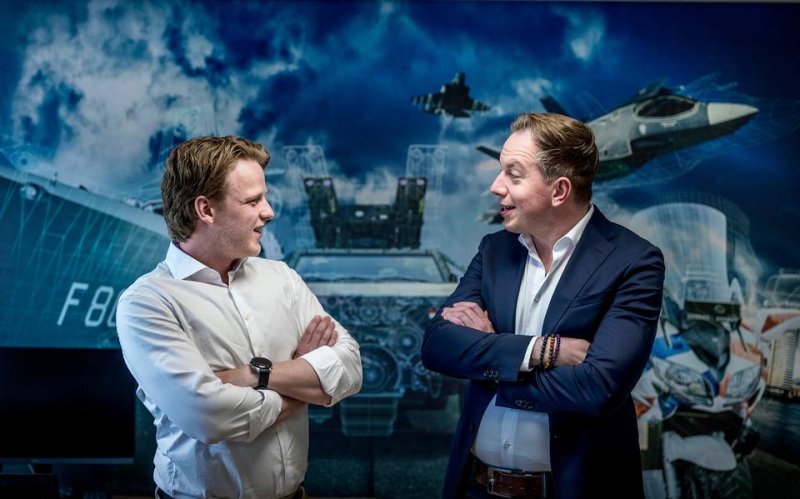
At Campus Groningen, companies, knowledge institutions and organisations work together on innovation and technological development. A recent example is the Defence North Business Cluster, in which thirty companies from the Northern Netherlands collaborate on innovation, technology and supply chain development. MIND-base North, located at the Zernike Campus in Groningen, also plays a connecting role in this initiative. Read the full article from Dagblad van het Noorden below.
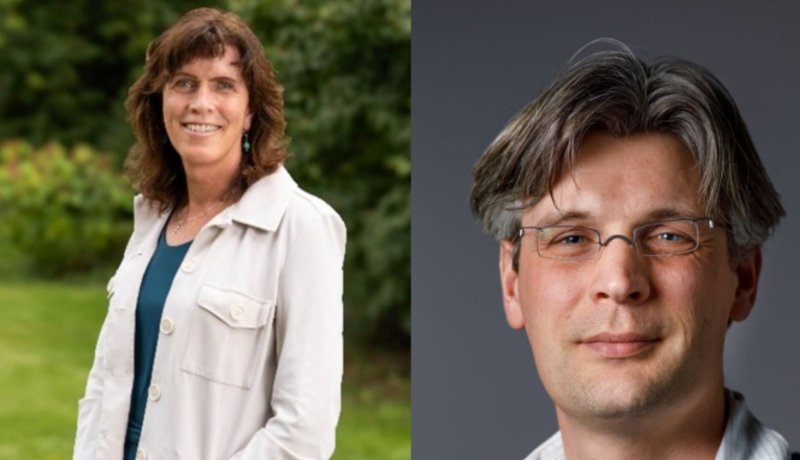
Professors Jacquelien Scherpen (who is also University of Groningen Rector Magnificus) and Lude Franke (UMCG) have been appointed members by the Royal Netherlands Academy of Arts and Sciences (KNAW). The KNAW elected 16 new members. The approximately 600 members of the KNAW are leading scientists from all disciplines. Membership is for life.About the research of Jacquelien Scherpen Jacquelien Scherpen is Professor of Systems and Control at the Faculty of Science and Engineering and Rector Magnificus of the UG. Her research applies to all kinds of technical systems, from controlling robots to regulating smart energy systems. Scherpen made significant contributions to the mathematics of balancing models for ‘non-linear control systems’, such as a thermostat linked to a heating system, thereby reducing their complexity. It is noteworthy that she also collaborated interdisciplinarily with behavioural scientists and economists to incorporate human factors. Scherpen speaks out publicly on science, technology and the development of talent. As a woman in a technical, male-dominated field, Scherpen fulfils her role as a role model with vigour.About the research of Lude Franke Lude Franke is Professor of Functional Genomics at the University Medical Center Groningen (UMCG). Lude Franke investigates non-coding DNA, genome sequences that are not transcribed into proteins and shed light on how cells and organisms function, and also opened up new avenues for the development of novel drugs. During the covid-19 outbreak, Franke developed the Corona Barometer, which helped us understand how the pandemic was unfolding. In addition, Franke has played a leading role in developing real-world applications for new discoveries, such as an affordable pharmacogenetic passport that predicts a patient's response to certain drugs. Franke also has a gift for visualising his research, and has won several awards for his graphic design work. Source: rug.nl
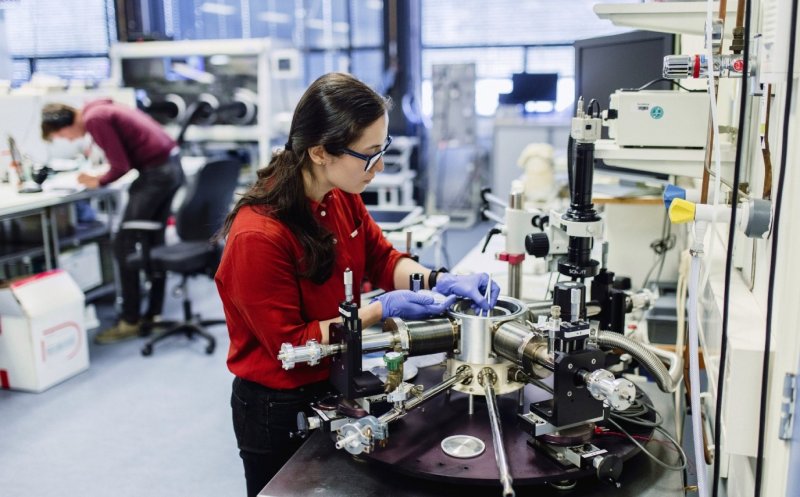
€9M NWO grant positions the Netherlands to lead next-generation brain-inspired computing The Netherlands is taking a major step toward energy-efficient computing with a €9 million grant from the NWO Knowledge and Innovation Covenant (KIC) Long-Term Programme, awarded to the ”10X-Factor(y): Towards a Dutch ecosystem for neuromorphic technologies“ project. The project is managed by UG researchers affiliated with CogniGron, a research hub that develops highly energy-efficient supercomputers. In total, the project will manage a total budget of 30 million euros, coming mainly from companies and private funders. 10x-Factor(y) will establish a national ecosystem for neuromorphic technologies: an emerging field that designs novel types of computing systems, inspired by the data processing principles of the brain. By bringing together leading research institutions, companies and universities, the initiative seeks to accelerate the development of next-generation computing systems that are orders of magnitude more energy-efficient than current solutions and enable real-time processing. CogniGron at the University of Groningen will lead the consortium in collaboration with partners including TNO, Eindhoven University of Technology, University of Twente, TU Delft, Radboud University, and Astron, and a range of high-tech companies such as Infineon, Innatera, Snap inc, Synopsys, Batenburg Beenen, Sencure, IMChip, Oxford Instruments, and OPT/NET. Together, they will work across the full innovation chain, from advanced materials, devices and chip design to system integration and applications. The aim is to lower the threshold to adopt neuromorphic technologies for real-world solutions. To this end, the program is designed around 7 demonstrators representing 7 use cases ranging from automation & robots, health monitoring & diagnostics to field sensors. 10x-Factor(y) will have the critical mass for realising these demonstrators and lay the basis for bringing such novel technologies to market. Working on the upcoming challenges within a 10-years project is a unique opportunity. “Neuromorphic technologies are already in the market, with Dutch companies leading in Europe. However, to penetrate the global user market, they must become a reliable, affordable, easy-to-integrate solution that solves urgent problems. 10x-Factor(y) aims to build that bridge” explains Beatriz Noheda, 10x-Factor(y) main principal investigator. A researcher working in the CogniGron labFuture-proof computing inspired by the brain Modern computing faces a critical sustainability challenge. Artificial intelligence (AI) is driving energy demand to levels that already limit the capacity of data centres and challenge the power grid. It also hinders the use of AI at places where power is limited, as health sensors or devices in remote locations. Instead, data is communicated into the cloud, resulting in severe privacy issues. These issues cannot be tackled with incremental changes but requires different computing paradigms like neuromorphic computing, which takes inspiration from the extreme energy efficiency of brains for information processing. This approach consists of using one or more of the principles used by the brain: use of analogue signals, implementation of asynchronous (event-based) processing, communication and information encoding via spikes and bringing the processor closer to the memory.An ecosystem for research, education and industry The KIC targets programs that address societal challenges faced by the Netherlands. The results should contribute to realizing economic opportunities and, thus, private investment is crucial. KIC-LTP programmes are expected to lead to long-term and sustainable innovations. The Netherlands is uniquely positioned to lead the neuromorphic computing revolution: It is one of the few countries with expertise spanning the entire neuromorphic value chain, supported by existing initiatives such as NL-ECO, Mission 10x , and the newly formed NC-NL alliance and national research programmes in AI, computing, photonics and semiconductors. The 10X-Factor(y) program builds on this foundation by integrating fragmented efforts into a coordinated, industry-driven ecosystem. 10x-Factor(y) will form an integrated community linking industry with research and education. In the span of ten years, it will develop prototypes, train new experts, and test real life applications. With shared infrastructure, co-design platforms, and responsible innovation frameworks, the programme will establish the Netherlands as a global leader in sustainable, energy-efficient neuromorphic computing. The Board of the University reacts to the news: “We are very proud that NWO will invest in neuromorphic computing, which started with the Cognigron centre in Groningen. This institute was made possible by a gift of the Ubbo Emmius Fund. The grant is an important boost for research into energy-efficient AI, which is urgent for today’s society.”About CogniGron Groningen Cognitive Systems and Materials Center (CogniGron) is a leading multidisciplinary research center at the University of Groningen for research and development on neuromorphic computing. CogniGron was founded on a large gift from the Ubbo Emmius Foundation. Source: rug.nl
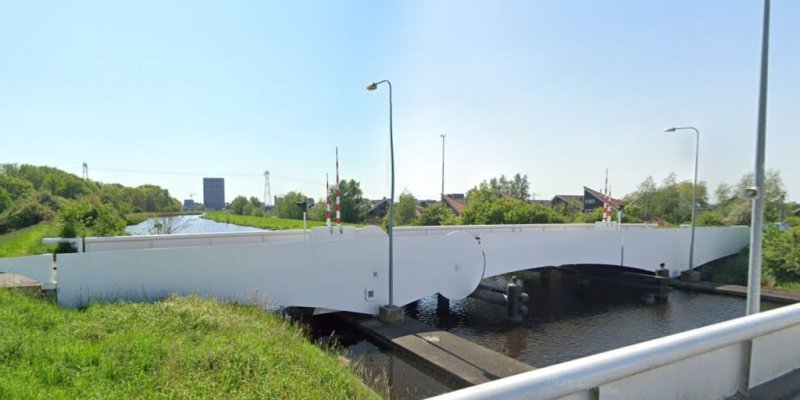
The Zernike Bridge on Professor Uilkensweg will be closed to car traffic from east to west (from Zernike towards Reitdiep) from Monday, May 4 at 05:00 until Friday, July 3 at 06:00. Traffic in the opposite direction will still be able to use the bridge. Cyclists can cross the bridge in both directions, and buses will also continue to operate with guidance from traffic controllers. Detour routes Car traffic from Zernike towards Reitdiep and Zuidhorn will be diverted via the northern ring road (N370) and the N355. Maintenance work The municipality of Groningen will carry out major maintenance on the Zernike Bridge. The bridge consists of two sections, and work will be carried out on one section at a time. This allows traffic to continue using the other section. The direction of travel will not change during the works; only traffic heading towards Zernike will be able to use the bridge. Source of article and photo: groningenbereikbaar.nl
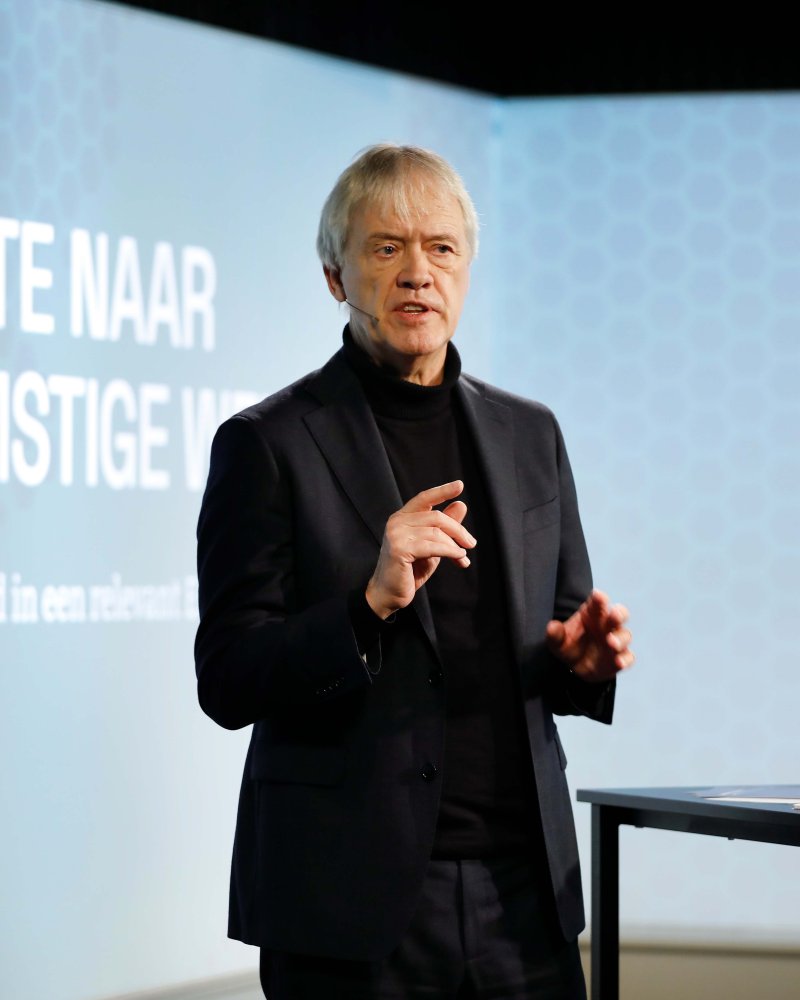
Turning plans into results: that is the central focus of the fifth LIFE Science Conference, taking place on Tuesday, 22 September 2026 at Forum Groningen. The LIFE Cooperative will bring together professionals, entrepreneurs, researchers and policymakers from the life sciences and health sector around one key question: how do we translate vision into concrete impact? The keynote speaker will be Peter Wennink, former CEO of ASML and one of the most influential leaders in the Dutch technology sector. In 2025, he presented his advisory report ‘The Road to Future Prosperity’, in which he advocates targeted investments in innovation to strengthen the Netherlands’ long-term earning capacity.
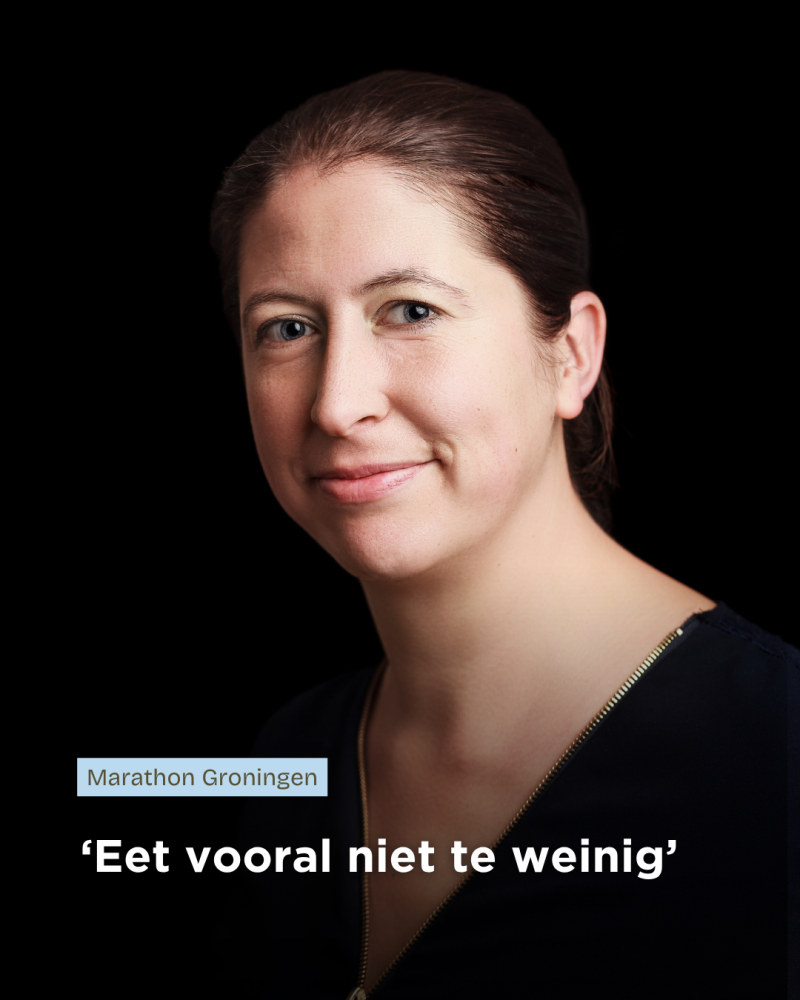
The engine behind your performance To understand why nutrition is so important, it helps to look at the basics. “We have three key macronutrients: carbohydrates, proteins, and fats,” Van der Zwaan explains. “Proteins mainly act as building blocks—important for recovery and muscle development. But when it comes to performance, carbohydrates are the key.” Carbohydrates are the main fuel during intense exercise—and that’s where the challenge lies. “Your body only has a limited supply of carbohydrates,” she says. “In well-trained athletes, that supply is depleted after about an hour and a half. After that, you simply can’t maintain the same intensity.” Or, as many runners know it: hitting the wall. “That moment when you suddenly have no energy left often happens because your carbohydrate tank is empty,” Van der Zwaan explains. “And that applies just as much to recreational runners.”When should you eat while running? For those preparing for the Marathon Groningen—or the half marathon or 10 km on May 31—timing is crucial. “Don’t just look at distance, but especially at duration,” Van der Zwaan advises. “If you’re running longer than an hour, you really need to start thinking about nutrition during your run.” An important detail: don’t wait until it’s too late. “You want to prevent that tank from running empty. So start eating within the first half hour.” What you eat differs from person to person. “Running makes eating more difficult because everything is moving. That’s why my main tip is: practice this during your training.” From gels to bananas, from dates to a simple muesli bar—it can all work. “As long as it contains carbohydrates and works for you.”Drinking: underestimated but crucial In addition to nutrition, hydration is essential. “Especially over longer distances, dehydration plays a major role in performance loss,” Van der Zwaan says. “Even a small percentage of fluid loss can already have an effect.” However, drinking only water is not always the best option. “Your body absorbs fluids better when they also contain sugars and salts,” she explains. “That’s why isotonic drinks work best.” This doesn’t have to be complicated or expensive. “You can make it yourself: a bit of lemonade syrup, water, and a pinch of salt will already get you a long way.”Recovery: where the gains are made What you do after running is just as important as what you do during it. “Training is essentially about breaking your muscles down a bit,” says Van der Zwaan. “After that, you want them to come back stronger. That process is called supercompensation.” Without proper recovery, progress stalls. “If you don’t eat enough after a workout, your recovery suffers and you risk overload or fatigue.” Fortunately, the solution is simple. “Make sure you get a combination of carbohydrates and proteins after your exercise. This can be a full meal, but also something small like yogurt with muesli and fruit, or a sandwich with toppings.” And that tempting post-run drink? “Hold off for a bit,” she advises. “Recovery first, then maybe a beer.”Start with the basics For many runners, the biggest gains don’t come from expensive supplements or complicated plans, but from the basics. “Don’t skip meals and eat a varied diet,” Van der Zwaan says. “Think vegetables, fruit, and whole grains. Basically: just eat normally.” It sounds simple, but in practice, this is often where things go wrong. “The most common mistake is that people don’t eat enough—especially when they start training more.” Signs like fatigue, poor recovery, or “heavy legs” can point to this. “The first step is often simply: eat a bit more.”Three tips for runners Van der Zwaan concludes with three concrete pieces of advice for anyone training for the Marathon Groningen: Train your nutrition as well“Practice what you eat and drink during your training. You don’t want surprises on race day.” Eat on time during your run“Start after half an hour and aim for about two snacks per hour during longer distances.” Build a strong foundation“Three solid meals a day and enough carbohydrates make the difference.” And perhaps the most important tip: don’t keep struggling with nutrition questions or concerns on your own. “If you notice that nutrition causes a lot of stress or you’re unsure what’s right, seek help,” says Van der Zwaan. “A sports dietitian can easily take a look with you.”Series leading up to the Marathon powered by Campus Groningen This article is the final part of a short series by Campus Groningen about preparing for the Marathon Groningen powered by Campus Groningen on May 31, 2026. In this series, we share tips, stories, and insights from runners, trainers, and experts on both the physical and mental aspects of running, so participants can start well-prepared and confident. Read more: The article on mental preparation for a marathon The article on the purpose of the marathon’s fundraising The article about the ACLO running clinics: Join the Ride The article on the social and economic impact of the marathon