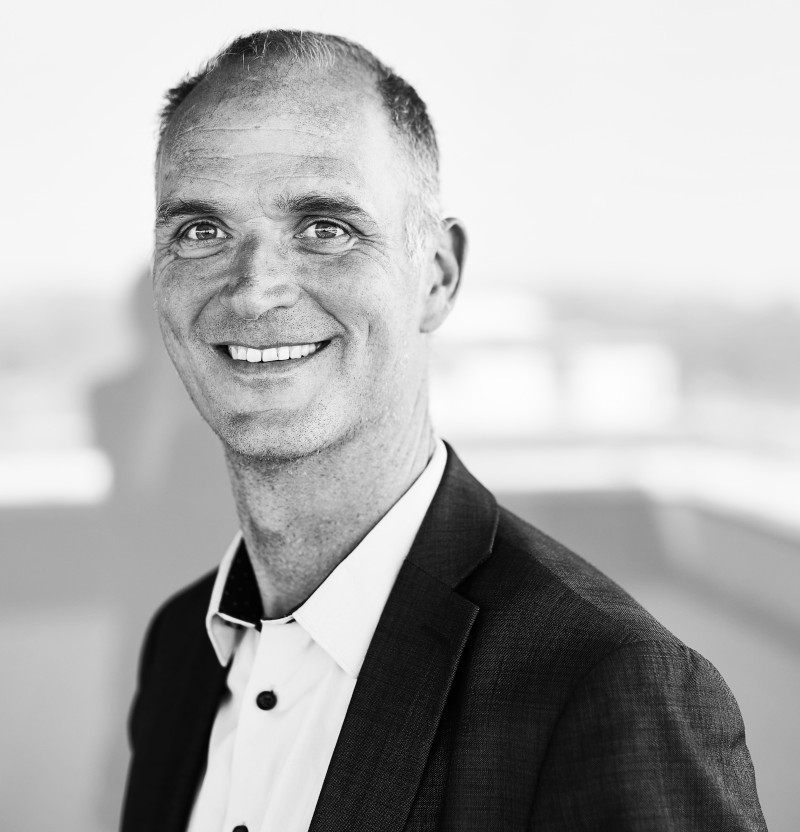
An idea conceived in a Groningen laboratory has grown into a tablet that is now being tested in patients for the first time. In the world of drug development, that is a rare achievement. Yet this is exactly what entrepreneur Kees van der Graaf, owner of Sulfateq, and Rob Henning, pharmacologist at the UMCG, have accomplished with SUL-238, an investigational drug that could potentially help treat chronic conditions such as Parkinson’s disease, Alzheimer’s disease, heart failure and kidney disease.
"Together with our partners, we turned an idea into a tablet," says Van der Graaf. "And we are still in the position to make our own decisions."
The story began more than fifteen years ago with Rob Henning at the UMCG. He was studying hibernating animals, such as Syrian hamsters, and wondered how they are able to survive for months with an extremely low metabolic rate without sustaining permanent damage to their organs and cells. In humans, cooling followed by rewarming can damage cells, whereas hibernating animals are naturally protected against this.
Henning laid the foundation for a new concept. Sulfateq then began searching for compounds capable of protecting human cells and, consequently, tissues and organs. This ultimately led to the development of SUL-238. Later, research by Guido Krenning (Chief Scientific Officer of Sulfateq and affiliated with the UMCG) and his team demonstrated that the compound's mechanism of action is linked to the cell's energy metabolism. According to Van der Graaf, this represents a fundamentally different approach to drug development. "Many researchers focus on blocking a single enzyme. We chose to learn from nature instead."
SUL-238 targets the mitochondria, the cell's energy-producing structures. As a result of ageing or disease, mitochondria can become less efficient, reducing the energy available to cells. This plays a role in a wide range of chronic diseases as well as several acute conditions. That is why the company is investigating SUL-238 across multiple disease indications.
"We were fortunate to identify a very fundamental mechanism in cellular energy metabolism," says Van der Graaf. "So far, all animal studies, as well as studies in healthy volunteers, have produced positive results."
The compound has now been evaluated in models of Alzheimer's disease, Parkinson's disease, heart failure, chronic kidney disease, COPD, ageing and sepsis. Sulfateq holds fifteen patents covering the compound and its various applications.
Van der Graaf considers it remarkable that a relatively small company has been able to advance an entirely new molecule this far. According to him, many promising drug candidates are sold to large pharmaceutical companies at an early stage because development costs increase rapidly.
"It is virtually impossible to bring a new medicine to market on the basis of a good idea alone," he says. "But we succeeded in turning an idea into a product."
Most of this work took place in Groningen and the Northern Netherlands. Development involved researchers from the UMCG, regional knowledge institutes and companies. Pharmaceutical manufacturer Ofichem in Ter Apel also contributed to the project. Van der Graaf credits Biobrug, a programme of the University of Groningen that stimulated collaboration between companies and university research groups, as an important catalyst. The initiative was established by Annemieke Galema, former director of Northern Knowledge. "That programme really helped us move forward," he says.
An important milestone was reached last year when SUL-238 proved to be safe in healthy volunteers. Since May 2026, a group of patients with Parkinson's disease has been receiving the drug for the first time in a clinical study conducted in collaboration with CTC Netherlands, located on Campus Groningen. "That is a fantastic milestone," says Van der Graaf. "You go from an idea to a tablet that is now being used by people living with a disease."
Whether the drug is truly effective will become clear over the coming years. Disease progression in Parkinson's and Alzheimer's is relatively slow, making clinical studies time-consuming. Sulfateq is therefore also focusing strongly on heart failure, particularly in women. Many existing heart failure treatments have primarily been studied in men. The team expects that SUL-238 could become an important new treatment option for women.
Van der Graaf also sees SUL-238 as proof that successful drug development does not have to remain the exclusive domain of large pharmaceutical companies. "We want to show that it can be done," he says. "Everyone talks about bringing new products to market. We have developed a tablet. Now we have to make sure it actually reaches patients."
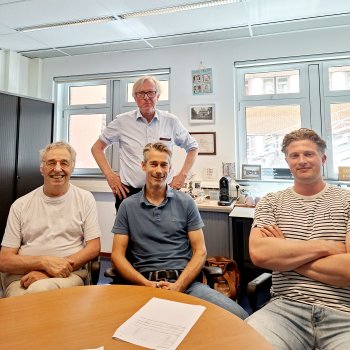
Photo: f.l.t.r. sitting: Rob Henning, Guido Krenning, Daniël Swart. Standing: Kees van der Graaf
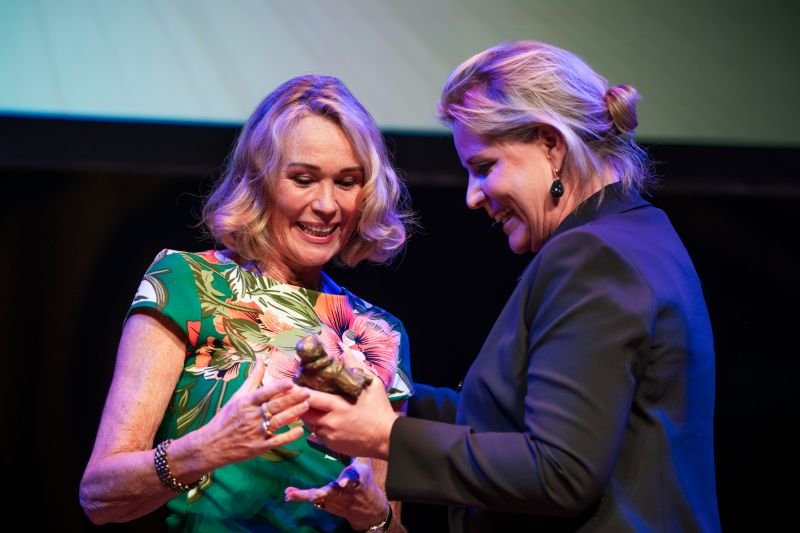
Iris Sommer will receive the 2026 NWO Stevin Prize, the highest honour for researchers in the Netherlands who have achieved exceptional results in translating knowledge into societal impact. Sommer will receive €1.5 million, to be spent on scientific research and initiatives relating to knowledge utilization. Sommer is a professor of Psychiatry at the UMCG and the UG.
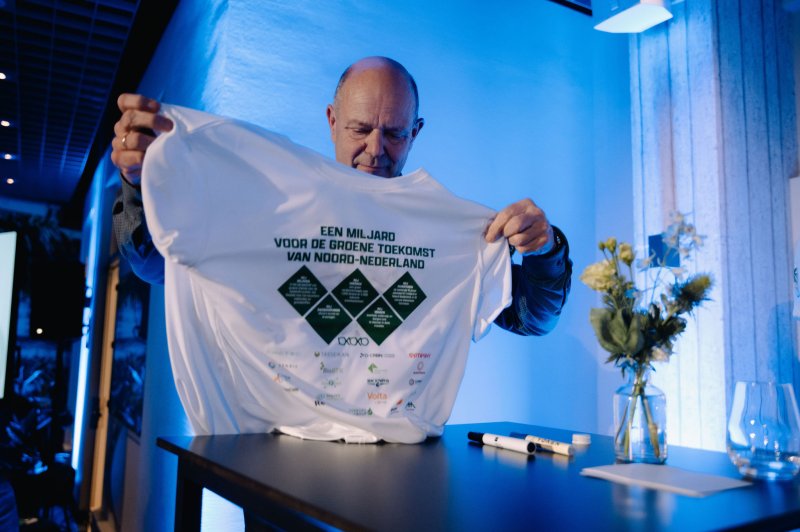
Mooi nieuws: 10x10x10 is genomineerd voor de Duurzame Dertig 2026, een initiatief van Dagblad van het Noorden, Leeuwarder Courant en Friesch Dagblad. Het project is geselecteerd in de categorie Duurzame samenwerking.
Engineero vestigt zich op Campus Groningen.