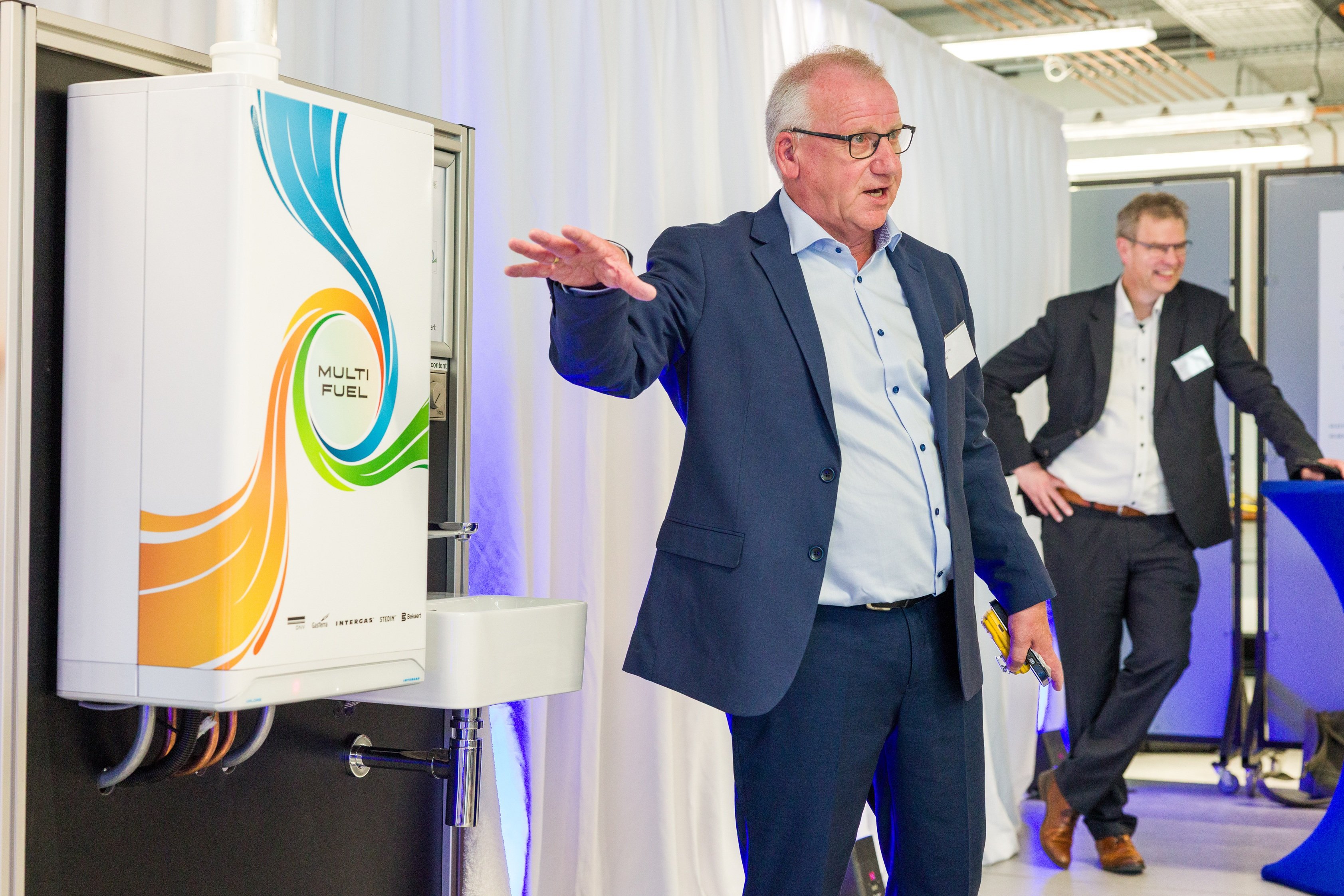
How can we make millions of homes more sustainable without burdening residents with high costs or requiring entire neighbourhoods to undergo energy upgrades at the same time? That question has driven researchers at DNV on Campus Groningen over the past eighteen months. The result was unveiled on 18 June: a proof-of-concept multi-fuel boiler capable of automatically switching between different types of sustainable gases.
According to Johan Knijp, Site Manager Groningen at DNV, the innovation could play an important role in the energy transition of the built environment. “Today, upgrades to homes and conversions of the gas network often need to happen at the same time,” he explains. “That makes the transition complex. With this technology, we can decouple those two processes.”
The multi-fuel boiler automatically adjusts to the available gas quality. Whether it is supplied with natural gas, hydrogen or a blend of different gases, the system continues to operate without requiring adjustments by a technician. For residents, little changes. Comfort remains the same, while the home is already prepared for future energy developments.
According to Knijp, this offers significant advantages. “If someone needs a new boiler today, they are essentially being asked to make a decision about the future. With this technology, that dilemma could disappear. You can install a boiler that is ready for future changes in the energy system.”
It also removes an important financial barrier. Homeowners no longer need to worry that a relatively new heating system will have to be replaced within a few years because their neighbourhood transitions to a different energy carrier.
The innovation is designed for a future in which gas networks do not disappear, but evolve. While natural gas remains the dominant fuel today, sustainable alternatives such as hydrogen, green gas and synthetic gases are expected to flow through the same infrastructure in the years ahead.
“The energy transition is not necessarily about becoming gas-free,” says Knijp. “It is about moving away from fossil natural gas. Existing gas networks can continue to play an important role in transporting sustainable gases.” That is precisely why flexibility within buildings is essential, he argues. Heating systems must be able to accommodate different energy carriers without residents even noticing.
The proof-of-concept was developed by a consortium consisting of DNV, Stedin, Intergas, Bekaert and GasTerra. DNV acted as the independent innovation partner. Rather than developing commercial end products, the company focuses on demonstrating the technical feasibility of new technologies.
“We take innovations to the point where they have been proven to work,” Knijp explains. “After that, it is up to manufacturers and technology developers to turn them into market-ready products.”
The development took place at DNV’s facilities on Campus Groningen. Knijp sees the campus as an environment where new ideas and collaborations can emerge. He would even like to see innovations such as this demonstrated in real-world settings in the future, making them more visible to a wider audience. “Campus Groningen is a great place to showcase new technology. Ultimately, you want innovations to move beyond the laboratory and become visible to residents, businesses and policymakers.”
For DNV, the project also carries historical significance. From Groningen, the company played an important role in the development of the first high-efficiency condensing boiler in the 1980s. More than forty years later, it is once again contributing to a technology that could influence how homes are heated in the future.
The multi-fuel boiler is not yet a product that will appear in stores tomorrow. The demonstration on 18 June primarily marked an important milestone: proof that the technology works. If the next phase of development proves successful, however, this flexibility could become a key enabler of an affordable and manageable energy transition.
For Knijp, the greatest impact lies with residents. “How great would it be if, a few years from now, you could buy a boiler knowing it will remain suitable no matter which direction the energy transition takes?” That, he believes, is the true strength of the innovation: not adding more complexity to the energy transition, but making it simpler.
Photographer: Jan Buwalda
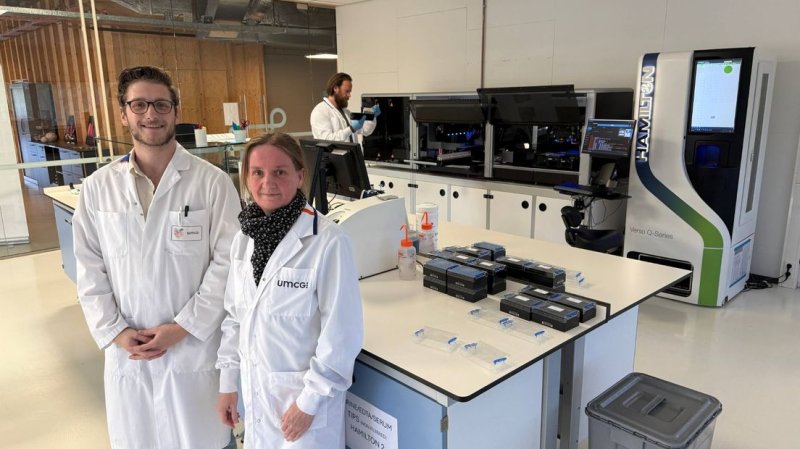
The large-scale Lifelines population study is inviting new participants for the first time in twenty years. The study is seeking around 16,000 relatives of existing participants. This expansion has been made possible by a grant from the National Programma Groningen (NPG).
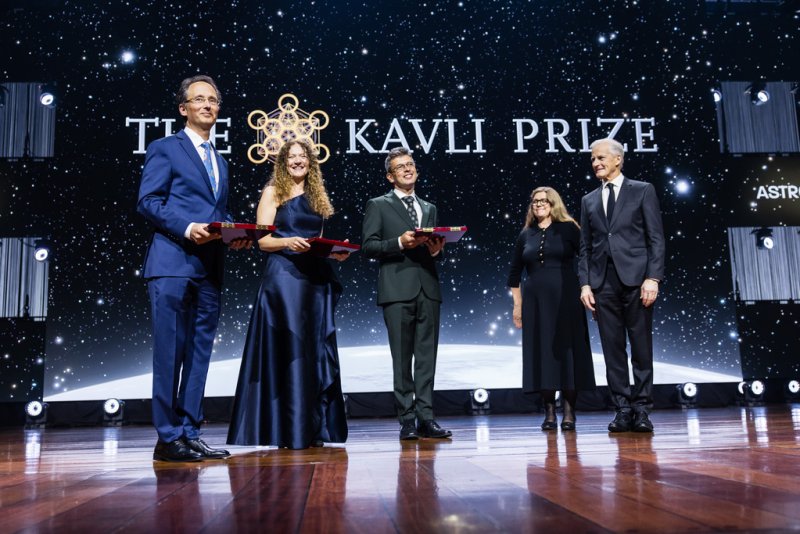
The 2026 Kavli Prize was awarded last week. Alongside the Nobel Prize, the Kavli Prize is regarded as one of the highest honours in science and is awarded every two years by the Norwegian Academy of Science and Letters.
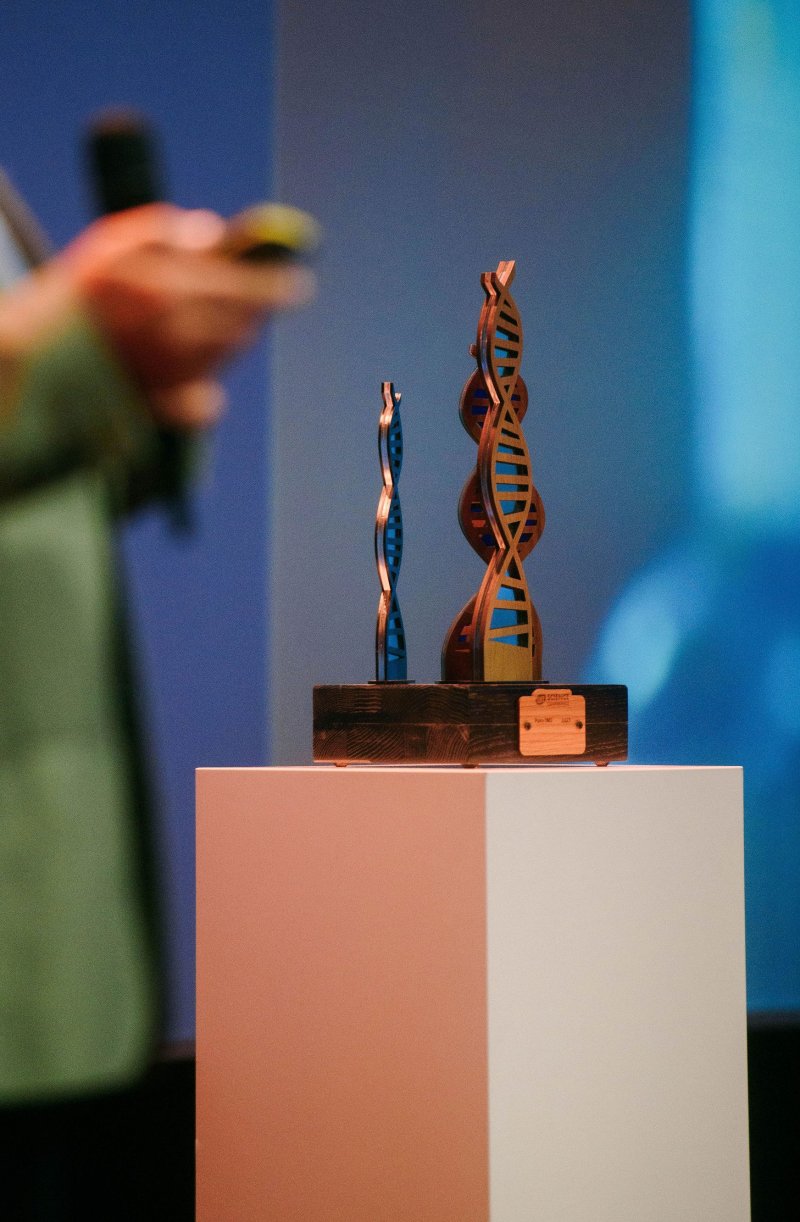
Who is developing the most impactful innovation in Life Sciences & Health in the Northern Netherlands? Five companies are in the running for the LIFE Science Innovation Award 2026: Flux Robotics, Limosa Immunodiagnostics, SPCTR, MimeCure and GlycanScan International. The nominees will present their innovations on Tuesday 22 September during the fifth edition of the LIFE Science Conference in Groningen. An independent jury will select the winner, who will receive a €10,000 cash prize.