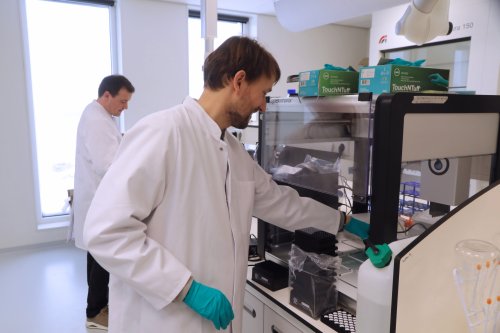
Fermentation processes, from food production to other applications, raise questions that require reliable data and testing. Based at Campus Groningen, SG Papertronics develops platform technology for biochemical and analytical testing, with a specialism in fermentation. From its lab at Innolab Chemistry & Engineering, co-founder Maciej Grajewski and his team work with companies and research organisations on testing and R&D.
“We specialise in process control through different biochemical and analytical tests,” explains co-founder Maciej Grajewski. The company’s mission is to provide people with the right data at the point where they need it. For agricultural entrepreneurs, for example, SG Papertronics can test soil and plant health, which can help determine whether plants need more or less fertiliser.
SG Papertronics was founded by Maciej Grajewski and his co-founder while they were PhD students at the University of Groningen. They wanted to take promising ideas from the lab and turn them into solutions that could be used in practice. “We wanted to make sure that discoveries and concepts could reach the market, so they could actually be applied, and somebody could benefit from the work done in academia.”
The company’s first product, the Beerometer, is designed as a kind of ‘lab in a box’. Brewers and fermentation companies can carry out tests themselves, without a specialised laboratory or extensive training. The expertise behind this product also provides a basis for working with other organisations on different testing questions.
SG Papertronics’ lab at Innolab Chemistry & Engineering can be adapted to different types of testing, depending on the question a partner brings to the table. “If we have a customer saying: I need to test this parameter, and I cannot do it myself, we can most likely adapt and test it,” says Grajewski.
This can be relevant to various research groups at knowledge institutions such as the University of Groningen, startups without their own lab and companies that need additional testing capacity. Rather than looking only at the test itself, SG Papertronics considers the process behind the question and helps put the results into context. This helps partners understand what the results mean for their work.
“We can not only select the right tests, but also deliver the information in the right context,” Grajewski explains. The approach builds on SG Papertronics’ expertise in fermentation and analytical testing.
The Campus Groningen ecosystem is well suited for a company like SG Papertronics: rich in knowledge and business partners. One example is its collaboration with fermentation company Parrhesia Fermentary. The two companies connected through the local network, which led SG Papertronics to explore applications beyond beer and into other forms of fermentation.
For Grajewski, these kinds of connections are valuable because they bring companies and expertise together. “We have a platform onto which new concepts in the form of new tests could be embedded.”
And what are the plans for the upcoming years? Grajewski: “We want to work with more breweries and fermentation companies and collaborate with researchers on new tests and applications. And we would love to contribute to more sustainability in agriculture by working with farmers on new fertilisation methods.”
Would you like to know more about SG Papertronics? Please visit the website.

Astronomer Francesca Rizzo of the University of Groningen (RUG) has won the KNAW Early Career Prize. The prize is intended for young scientists with innovative research ideas and consists of a work of art and 15,000 euros to support the further development of their careers. Rizzo is one of twelve researchers to receive the prize.

Als student stuitte Sander de Raad jaren geleden op een bijzondere vrucht, genaamd Genipa americana, in een bos in Ecuador. Deze toevallige ontdekking groeide uit tot een bedrijf dat natuurlijke blauwe kleurstoffen ontwikkelt en wereldwijd verkoopt. Dit bedrijf, Blue Leaf, vestigde zich in de zomer van 2026 in het Innovatiecentrum Chemie & Engineering op Zernike Campus.
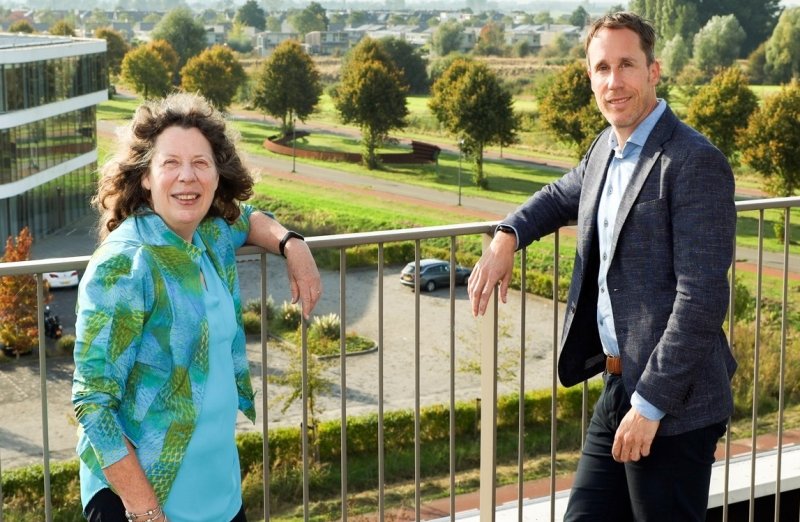
Scientific research regularly leads to innovative techniques or new products that can have societal or economic value. This is where commercialisation comes into play: taking research further into practical application. Funding is often required for this step. For 30 years, RUG Ventures has therefore been investing in enterprising academics who wish to develop their ideas into businesses. Through funding, entrepreneurship support, coaching and a network of investors, RUG Ventures helps bridge the gap between science and the market.