As a student, Sander de Raad came across a remarkable fruit called Genipa americana in a forest in Ecuador. This chance discovery led to a company that develops natural blue colorants and sells them worldwide. Blue Leaf established itself at the Innovation Centre Chemistry & Engineering on Zernike Campus in the summer of 2026. From Groningen, founder Sander de Raad is working on the next step: developing new applications to grow the entire value chain.
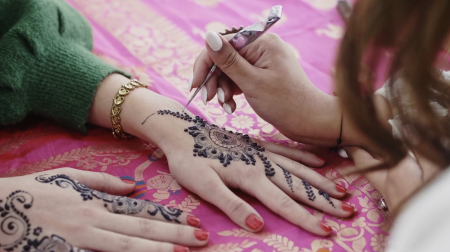
The discovery of the fruit was largely a coincidence. De Raad studied at Hanze University of Applied Sciences and encountered the Genipa americana during a gap year in South America. Local people used the fruit to create temporary tattoos on their skin. “They cut open the fruit and made a juice from it. They drew tattoos on each other and on me. The next day, I couldn’t get it off.”
The dark blue colour remained visible for about two weeks and sparked his curiosity. Together with his co-founder, Mike de Rooy, De Raad explored the possibilities. “We saw the potential of the product, but it wasn’t really being sold yet.” The student company they subsequently founded developed various cosmetic products based on the fruit.
Blue Leaf now sells powders, juice and gels for temporary tattoos through JaguaHenna.com to henna artists around the world. Its customers range from independent henna artists and consumers to major cosmetics companies that use the colourant as an ingredient.
Growth accelerated when Blue Leaf decided to manage the entire value chain itself. The company now works with more than 50 farming families in Colombia, where the fruits are harvested and partly processed. Part of the production process takes place in Groningen.
“We don’t just want to sell a product. We see ourselves as a social enterprise,” says De Raad. The trees grow in the wild, and there is currently no commercial cultivation on plantations. By creating a market for the fruit, Blue Leaf aims to encourage farmers to protect existing trees and plant new ones. “We sometimes say that we want to become the Tony’s Chocolonely of blue colorants.”
Temporary tattoos are not the end goal for Blue Leaf. According to De Raad, the blue colourant also has potential applications in food, pharmaceuticals and textiles. Blue is a primary colour that can also be used to create other colours.
Further product development is needed to realise this potential. “We need to expand our R&D capacity so we can develop new applications. This will help us enter new markets and ultimately increase our positive impact.”
This is an important reason for establishing a presence on Zernike Campus. At the Innovation Centre Chemistry & Engineering, Blue Leaf has access to laboratory facilities and, above all, knowledge and connections. “You just reach out, and you’re immediately put in touch with the right people. If we need specific tests, I can turn to our neighbours.”
Blue Leaf is also increasingly collaborating with students. Four people are currently involved in the company’s activities on campus, including two interns. Projects range from product development to technical challenges. “We’re always looking for more expertise and enthusiastic students who say: I’d like to contribute to this.”
Blue Leaf has ambitious plans. In the coming years, the company aims to grow its temporary tattoo business, increase fruit sourcing in Colombia and build a larger team on the ground. At the same time, it wants to establish a dedicated R&D team in Groningen to develop new applications for food, pharmaceuticals and textiles.
De Raad is keen to collaborate with others. “We can’t do all of this ourselves. We have to do it together.” Being based on Zernike Campus helps create these connections. After about a month and a half on campus, De Raad is already noticing the growing activity. “At first, during the holiday period, there wasn’t much happening. Now things are starting to buzz.”
For Blue Leaf, the blue colourant is only the beginning. The company wants to build a value chain in which innovation, entrepreneurship and nature reinforce one another. New applications should increase demand for the fruit, provide farmers with more income and ultimately contribute to reforestation in Colombia. As De Raad puts it: “Product development is a means for us to help this value chain flourish.”
For more information, check Blue Leaf / JauguaHenna.
Text: Campus Groningen (author: Marlies Schipperheijn)
Source pictures: Blue Leaf
Scientific research regularly leads to innovative techniques or new products that can have societal or economic value. This is where commercialisation comes into play: taking research further into practical application. Funding is often required for this step. For 30 years, RUG Ventures has therefore been investing in enterprising academics who wish to develop their ideas into businesses. Through funding, entrepreneurship support, coaching and a network of investors, RUG Ventures helps bridge the gap between science and the market.
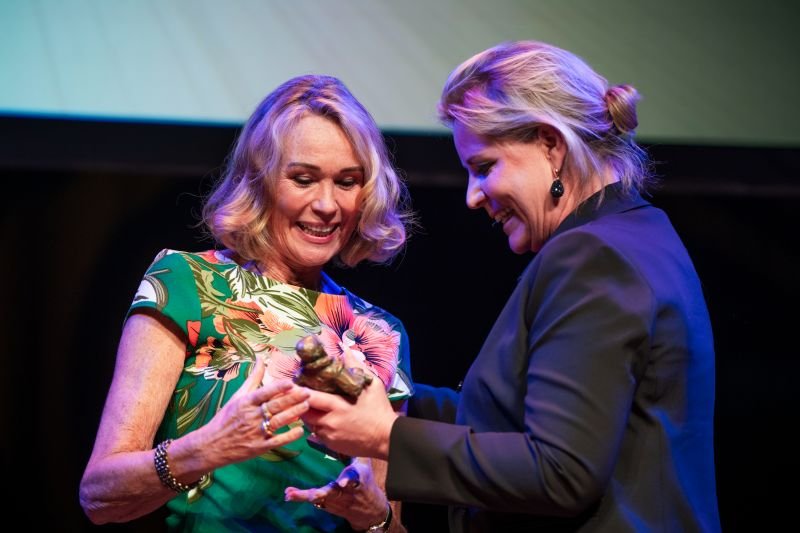
Iris Sommer will receive the 2026 NWO Stevin Prize, the highest honour for researchers in the Netherlands who have achieved exceptional results in translating knowledge into societal impact. Sommer will receive €1.5 million, to be spent on scientific research and initiatives relating to knowledge utilization. Sommer is a professor of Psychiatry at the UMCG and the UG.
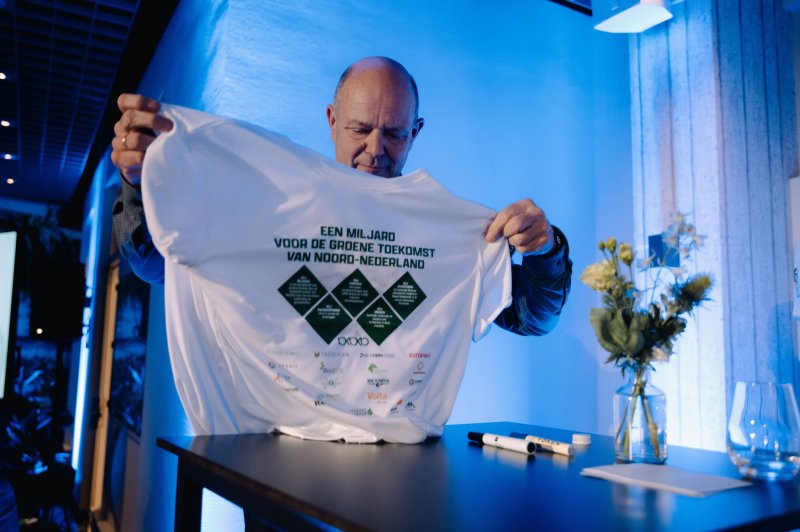
Mooi nieuws: 10x10x10 is genomineerd voor de Duurzame Dertig 2026, een initiatief van Dagblad van het Noorden, Leeuwarder Courant en Friesch Dagblad. Het project is geselecteerd in de categorie Duurzame samenwerking.