Scientific research regularly leads to innovative techniques or new products that can have societal or economic value. This is where commercialisation comes into play: taking research further into practical application. Funding is often required for this step. For 30 years, RUG Ventures has therefore been investing in enterprising academics who wish to develop their ideas into businesses. Through funding, entrepreneurship support, coaching and a network of investors, RUG Ventures helps bridge the gap between science and the market.
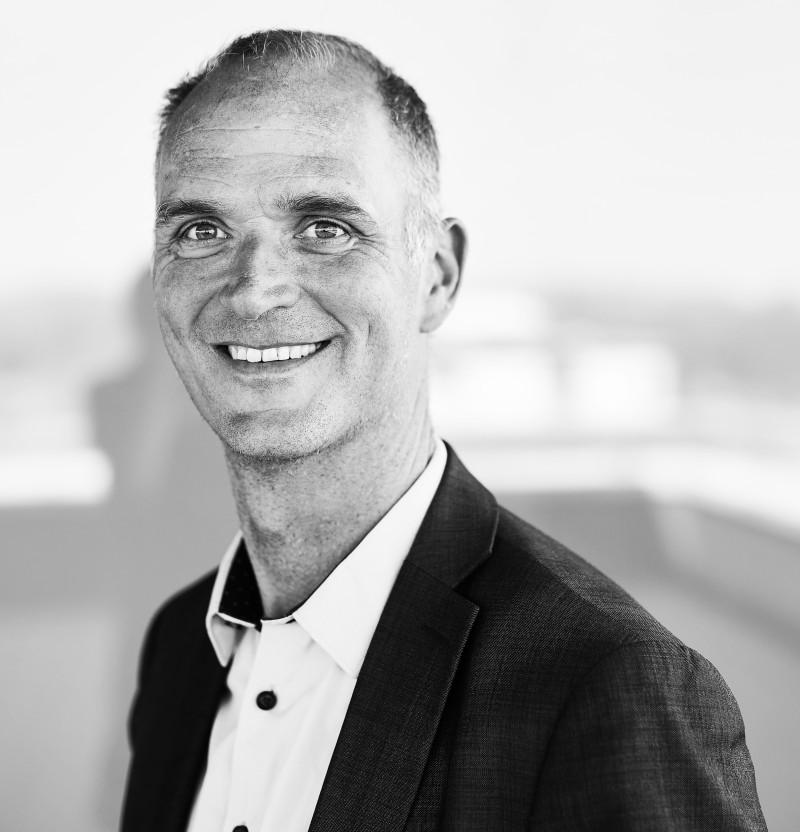
‘In addition to teaching and research, there is commercialisation – in other words, bridging the gap to practical application,’ explains Arjan Koop, investment manager at RUG Ventures. ‘You take the research a step further and ask: what is its benefit to society? That is the third role of a university.’
RUG Ventures was founded in 1996 to facilitate the transition from researcher to entrepreneur. This approach allows for early investment in innovative ideas and technologies. This takes place at an early stage, when a technology is still very much under development. ‘You need money for those start-ups, but at such an early stage it’s often too risky for banks. It involves further research, testing, demonstrations and prototypes. So we get involved very early on in the development process. Because if you don’t invest at that stage, nothing will come of the idea. It’ll just gather dust on the shelf.’
RUG Ventures is therefore not intended for a product that is market-ready. Anyone seeking funding solely to produce an existing product on a larger scale is not eligible.
As well as funding, providing guidance to researchers with an idea is just as important. Within the university’s ecosystem, various parties are involved in providing this support. Business Generator Groningen (SBGG), together with the IP Team, handles matters such as intellectual property, protection and the potential licensing of an invention. In addition, SBGG provides support in securing grants and developing the idea into a start-up. Entrepreneurship programmes and coaching courses can be undertaken via Innokite.
‘Academics are not necessarily entrepreneurs. You really want someone to be properly prepared for entrepreneurship before you say: here’s a hundred thousand Euros, go and start a business. It doesn’t work to just give someone a bag of money and say: sort it out for yourself.’
Before any investment is made, it is therefore important to understand who the researcher is, the composition of the team and the motivation behind taking the step into the market. Only then is the question of funding addressed. RUG Ventures looks at the team, the market and the plan. ‘Who are you? What’s the team like? Do you say what you do, and do what you say? We think that's important,’ says Koop.
In most cases, RUG Ventures’ investment managers can assess the technology themselves. They can also draw on expertise from the network. At the same time, RUG Ventures focuses explicitly on the market.
‘If a researcher has been working here for twenty years, we assume they really do know what they’re talking about. Our role then is primarily to ask: is this something the world needs?’ After all, a technically excellent product does not automatically lead to a successful business. ‘For example, you could make paint that costs 10,000 euros per litre. That paint might be technically outstanding, but you’re not going to use it to paint a ship.’
That is why a sound business plan is a key part of the preparation. The next phase of funding is also considered at an early stage. An investment by RUG Ventures is often not a stand-alone venture: as a company develops further, other investors may come on board.
By pooling resources and utilising grants, there is greater scope to invest in promising technology companies. This collaboration is currently taking shape within Future Tech Ventures, in which RUG Ventures works alongside the Groningen Investment Fund, the NOM and Triade (the counterpart to the UMCG). Identifying potential companies and ideas within the University of Groningen and supporting the entrepreneur is also a key role for RUG Ventures within Future Tech Ventures.
Investing at an early stage also means that not every company will ultimately reach the market. Some ventures grow into successful businesses, whilst others do not make it. According to RUG Ventures, this too is part and parcel of early-stage investing. ‘If no company in your portfolio ever goes bankrupt, that could also mean you’ve been too cautious and played it safe. Unfortunately, we don’t have a crystal ball either.’
One successful example is a company (Organ Assist, now XVIVO) in which an investment was made in 2005. The company develops equipment that keeps organs alive during transplants. ‘These are fine examples of technologies that ultimately do make it into clinical practice.’ The shares were subsequently sold in 2020.
For researchers who have an idea of their own, the path to entrepreneurship can seem complicated. Where do you start if you want to bring the results of your research to market? According to RUG Ventures, it actually starts very simply: ‘Come and see us. An initial meeting doesn’t need to involve a fully developed business idea or a complete business plan. Together, we can explore what the technology requires, how the intellectual property is structured, whether there is a market for it, and what support is needed.’
Moreover, entrepreneurship does not necessarily mean giving up an academic career entirely. Professors can fulfil a scientific role within a company, whilst a business partner takes charge of day-to-day management. ‘The most important message, therefore, is perhaps that the step towards entrepreneurship needn’t be as big as researchers sometimes think.’
‘You might well come to regret later on that you never gave it a go. So if you’re thinking, “I’ve got an idea”, just pop in or send an email.’ There may be a considerable gap between a promising research result and a business. RUG Ventures helps researchers bridge that gap step by step.
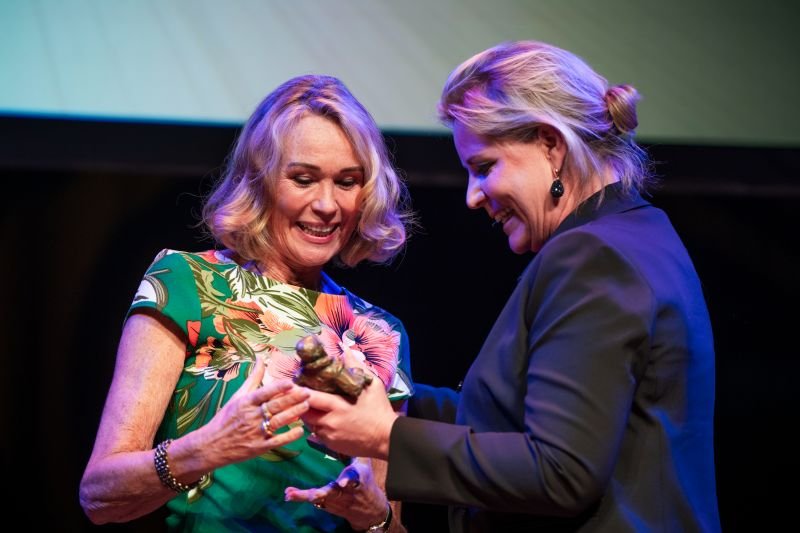
Iris Sommer will receive the 2026 NWO Stevin Prize, the highest honour for researchers in the Netherlands who have achieved exceptional results in translating knowledge into societal impact. Sommer will receive €1.5 million, to be spent on scientific research and initiatives relating to knowledge utilization. Sommer is a professor of Psychiatry at the UMCG and the UG.
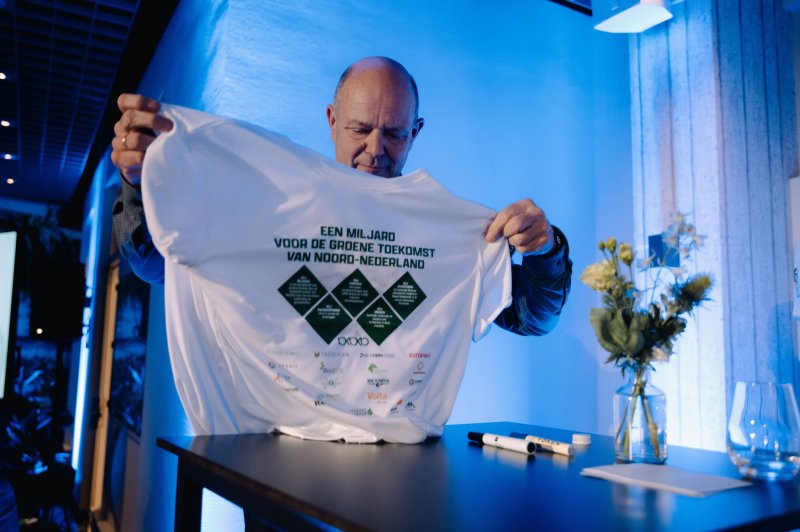
Mooi nieuws: 10x10x10 is genomineerd voor de Duurzame Dertig 2026, een initiatief van Dagblad van het Noorden, Leeuwarder Courant en Friesch Dagblad. Het project is geselecteerd in de categorie Duurzame samenwerking.
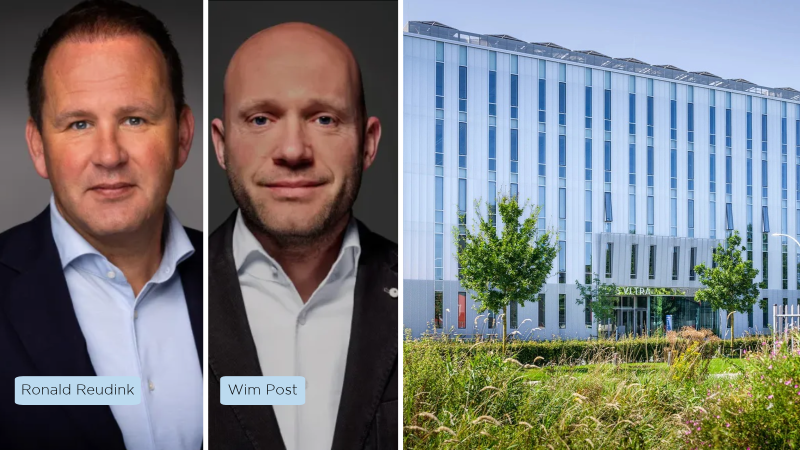
Engineero vestigt zich op Campus Groningen.