The University of Groningen (RUG) is researching the importance of darkness for humans and nature. A special measuring network is used to measure how dark it still is in the Netherlands. Now the UG is asking for your help: count the stars in the constellation Orion and contribute to this important research. The measurements will take place from Tuesday, January 21st, to Wednesday, February 5th, and from Thursday, February 20th, to Thursday, March 6th. Go outside after 8:00 PM, count the stars in Orion, and submit your results via teldesterren.nl. Read the UG's call for contributions here.
(article in dutch)
Op echt donkere plekken kun je zelfs prachtig de Melkweg zien, ook in Nederland. Dat is niet vanzelfsprekend in Nederland. Duisternis is een ‘oerkwaliteit’ van leven en van belang voor mens en natuur: daar moeten we zuinig op zijn. Onderzoek, ook aan de Rijksuniversiteit Groningen, duidt erop dat het verdwijnen van duisternis nadelige gevolgen heeft. Maar hoe donker is het eigenlijk nog? De RUG beheert een duisternis-meetnetwerk, “maar we kunnen niet overal meten” aldus ‘duisternisbewaker’ Theo Jurriens. Daarom vragen we hulp van het publiek!
Het sterrenbeeld Orion staat centraal in de meetactie. Iedereen kan aan de meetactie meedoen door het tellen van de sterren in dit goed herkenbare sterrenbeeld. Het stappenplan is als volgt: ga naar buiten (na 8 uur ’s avonds) en zoek het sterrenbeeld Orion. Wacht een kwartiertje, je ogen moeten namelijk aan het donker wennen. De vier hoeksterren van Orion vormen een rechthoek: tel het aantal sterren binnen deze rechthoek. Ben je een pietje-precies? Doe de telling dan meerdere keren achtereen en geef de gemiddelde waarde door. Jouw metingen kun je doorgeven via teldesterren.nl waar de meetgegevens ook zichtbaar worden op de kaart. Op deze website staat tevens een handleiding met meer uitleg.
De metingen moeten plaatsvinden in de periode 21 januari tot en met 5 februari en 20 februari tot en met 6 maart. Dat heeft alles te maken met de stand van de maan: metingen worden gedaan als de maan onder de horizon is. Wanneer het bewolkt is, slecht weer, of de maan boven de horizon staat hebben de metingen geen zin.
De duisternis, het oudste universele erfgoed, is van ons allemaal en overal van belang. Met deze meetactie hopen we mensen bewust te maken van de urgentie om de donkerte te beschermen. Misschien kijk je hierdoor ook wat vaker naar de sterrenhemel, en kun je straks vele sterrenbeelden vinden. Dit jaar is de stertelling ook een mooi “voorafje” van de Nationale Sterrrenkijkdagen: 7 t/m 9 maart. Op veel plekken in Nederland staan telescopen opgesteld, een prachtige gelegenheid om van de sterrenhemel te genieten.
Bron tekst: rug.nl
Afbeelding: Orion nebula (Pexels, fotograaf Benjamin Walsham)
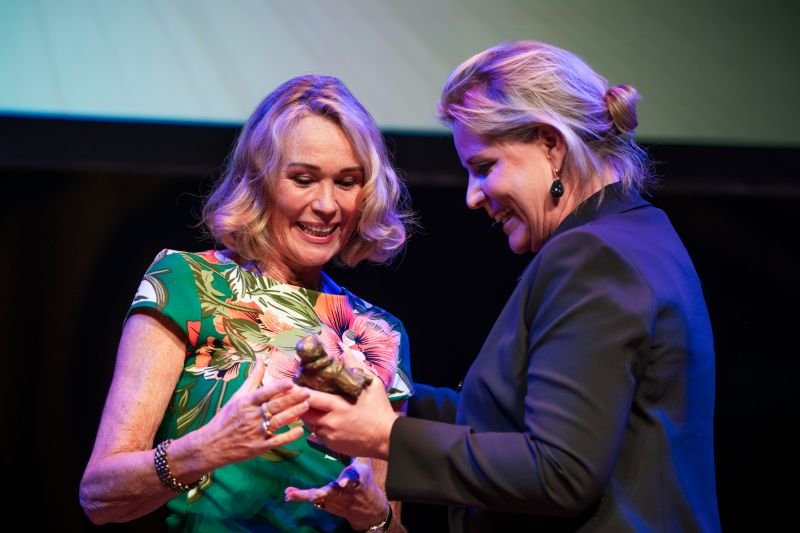
Op zondag 31 mei 2026 staat Groningen in het teken van sport, doorzettingsvermogen en betrokkenheid. Tussen alle lopers is ook het herkenbare roze van Vrienden Beatrix Kinderziekenhuis zichtbaar.
The LIFE Cooperative, part of the Northern Netherlands life sciences ecosystem at Campus Groningen, is organizing the Dutch Medicines Winter Afternoon together with FIGON on Thursday, 26 February. This fully booked event brings together leading scientists and industry experts to explore the latest developments in innovative medicines and advanced drug delivery. Read the full article as published by the LIFE Cooperative.National Attention for Sold-Out Dutch Medicines Winter Afternoon: Innovative Medicines and Advanced Drug Delivery Take Center Stage in Groningen Innovation in medicines takes center stage on Thursday, 26 February during the Dutch Medicines Winter Afternoon, an inspiring event organized by FIGON (Federation for Innovative Drug Research Netherlands) in collaboration with the LIFE Cooperative. “We are extremely proud of the strong line-up at this event, bringing together leading experts from science and industry to explore the frontiers of drug development. The fact that registrations are already fully booked underlines the great importance of this event for the life sciences ecosystem, and in particular for the Northern Netherlands,” says Ronald Hesse, Director of the LIFE Cooperative. The Dutch Medicines Winter Afternoon brings together scientists, innovators, and professionals from across the Netherlands for an afternoon of insights, knowledge exchange, and networking opportunities. The speaker line-up features experts from both academia and industry. This event is already fully booked. Interested in joining the waiting list? Please email: amber@lifecooperative.nlConnecting force The afternoon will be opened by Prof. Klaas Poelstra of the University of Groningen (RUG), Chair of FIGON, who will outline the importance of innovative drug development in the Netherlands. This will be followed by an introduction by Robert Hof on behalf of the LIFE Cooperative, highlighting the cooperative’s role as a connecting force within the regional ecosystem. The first session block before the break focuses on innovation in drug delivery systems. Rob Steendam (CTO, InnoCore) will discuss the development of long-acting SynBiosys® microspheres for controlled and sustained drug release. Jaap Wieling (CEO, PureIMS) will present the potential of dry-powder inhalation via the Cyclops® technology for both pulmonary and systemic indications. From an academic perspective, Prof. Marleen Kamperman (University of Groningen) will explore the potential of polyelectrolyte coacervates as innovative drug delivery platforms.Deep dive After the break, the focus shifts to advanced nanomedicines and clinical development strategies. Dr. Flávia Sousa (RUG) will present her work on polymer-based nanomedicines for the delivery of biotherapeutics to the brain. Dr. Ad Roffel (ICON plc, Groningen) will address mass balance and absolute bioavailability studies with ¹⁴C-labeled drugs in humans, an essential component of clinical drug development. Prof. Erik Frijlink (RUG) will reflect on the value of innovation within both established and advanced drug delivery systems, placing technological progress in a broader pharmaceutical context. Finally, Prof. Helder Santos (RUG) will demonstrate how nanomedicines are being used for RNA delivery in myocardial infarction repair, a promising development in cardiovascular therapy. “We are extremely proud of the strong line-up at this event, bringing together leading experts from science and industry to explore the frontiers of drug development. The fact that registrations are already fully booked underlines the great importance of this event for the life sciences ecosystem, and in particular for the Northern Netherlands." - Ronald Hesse, director LIFE CooperativeClosing and networking The afternoon will conclude with a contribution by Peter Ketelaar (LIFE Cooperative), followed by closing remarks from Prof. Klaas Poelstra. Participants will then have the opportunity to connect and continue discussions during the networking reception. Hesse looks forward to the event: “With this event, FIGON and the LIFE Cooperative underline the strength of collaboration between academia, industry, and clinical practice. The Dutch Medicines Winter Afternoon promises not only to be an inspiring afternoon, but also to provide momentum for further innovation and collaboration within the Northern Netherlands life sciences ecosystem.” Text: lifecooperative.nlPhotographer: Casper Maas
The master plan for the Healthy Ageing Campus has officially been approved! This marks an important step in developing the campus as a hub for knowledge, innovation, and collaboration. With a focus on greenery, health, and connection to the city, the campus will become a vibrant environment where research, education, healthcare, and business come together. The vision provides space for new laboratories, building renovations, meeting places, and closer collaboration between UMCG, RUG, and the business community. Read the whole article by the UMCG below.Green light for the Healthy Ageing Campus Master Plan On Wednesday, 18 February 2026, the Groningen City Council formally approved the master plan for the Healthy Ageing Campus. This is a major milestone, as the plan provides the framework for the campus’s further development and its integration with the surrounding area. At the end of last year, the University of Groningen (RUG), the University Medical Center Groningen (UMCG), and the City of Groningen presented an ambitious, future-proof plan for the campus. Shared ambitions have been translated into coherent spatial and programmatic guidelines for current and future developments. In other words: how much space is available for which functions on the campus, and where is the most suitable location for them? The renewed campus will: Provide space for knowledge, innovation, and collaboration, encouraging interaction between disciplines and people; Connect with the city, making the campus a natural part of Groningen life; Be a healthy and sustainable environment, with attention to greenery, physical activity, wellbeing, and a living environment that supports health; Be lively and accessible, bringing together living, working, research, studying, and healthcare.Next steps The master plan is not only a blueprint for the future, but also a concrete step toward further developing the current campus. Construction and renovation on the UMCG and RUG grounds are ongoing, and each project must now be assessed to determine what is possible. With the approval of this master plan, the way is cleared for follow-up decisions, including applying for demolition and building permits and further project development within the area. Upcoming projects include: The construction of the Central Laboratory for Diagnostics and Research (CLDR): a new laboratory building on the site of the former UCP building. This building will bring together various laboratories in one location to improve collaboration. Relocating laboratories from the Central Medical Complex is also necessary for the renovation and expansion of several hospital departments; Renovation and future-proofing of existing UMCG and RUG buildings, with attention to sustainability, flexibility, and integration with the heating/cooling system; Making the campus greener and more accessible, creating new meeting places and better connections to surrounding public spaces; Creating space for campus-related business activities, strengthening collaboration between UMCG, RUG, and the private sector.Municipality explores the future of DOT Initially, the master plan covered the area between Petrus Campersingel and Oostersingel, from Hanzeplein to the Oosterhamrikkanaal. In the newly approved plan, the Bodenterrein site has been separated, as the municipality is investigating the costs of possibly preserving DOT. More information on this will be available later this year. Read more about the Master Plan.Source text and pictures: umcg.nl