At first glance, algae farming seems simple: just grow algae in a tank of water. But behind that green promise lies a technological marvel. At Campus Groningen, the startup Algy Cultivator is developing a unique solution at Innolab Engineering to grow microalgae year-round, day and night, under controlled conditions. “We create equipment that uses LED light to grow algae 24/7. No more, no less,” says co-founder Joep de Vries.
Algy Cultivator is part of the overarching Algy Group and focuses on one mission: developing and selling equipment that enables microalgae cultivation 24/7, independent of sunlight. “Instead of relying on natural sunlight hours, which the Netherlands simply lacks, we use LED light combined with smart light recipes. This way, we create ideal growth conditions all year round,” Joep explains.
"We create equipment that uses LED light to grow algae 24/7. No more, no less"
- Joep de Vries, co-founder Algy Cultivator
Microalgae are microscopic, single-celled organisms with an enormous range of applications—from cosmetics and dietary supplements to pharmaceuticals and even the energy sector. Despite their potential, large-scale, controlled cultivation remains challenging.
“The biggest challenge is scaling up,” Joep says. “There is a lot of algae research worldwide. But if you need consistent quality at larger volumes, especially in Northern Europe, we are one of the few companies offering a serious solution.”
That solution lies in so-called reactors: specially designed, stainless steel cultivation devices where algae grow under controlled conditions. “We develop light recipes tailored for specific algae and applications. We test these in our own mini-reactors at Innolab Engineering. If all goes well, we’ll deliver to our first customer by the end of this year.”
Choosing Campus Groningen and Innolab Engineering was strategic, according to Joep: “Here, R&D, collaboration, and scaling converge. We test our mini-reactors at Innolab. For larger systems, ranging from 10 to 15 cubic meters, we partner with Avebe or ZAP, the Zernike Advanced Processing facility at Hanze University. Scaling is essential because that’s when it becomes commercially viable for customers.”
The campus also offers ample opportunities for collaboration with companies, knowledge institutions, and students. “We’re already in talks with the Technical Business Administration program at Hanze University to involve interns and graduates. There’s so much to explore, and it’s a unique chance for students to work in a cutting-edge startup.”
What makes Algy Cultivator unique isn’t just the hardware, but especially the light control. “Our expertise lies in managing the LED tubes and the specific light recipes,” Joep explains. “We build all of that ourselves, which makes us flexible and scalable.”
The startup currently consists of a team of four: two founders, Filips Jager and Jarno Stel, and two co-founders, Joep de Vries and Kasper Falke Jensen. Together, they’re building a solid foundation. “Filips is our algae specialist, Jarno focuses on light and ICT, and Kasper and I handle business and financing.”
Algy Cultivator has clear ambitions for the coming years. “We want to grow into a place where we can build our own lighting systems and produce small quantities of biomass. Customers need a starter volume to continue from themselves. Ultimately, we want to offer algae tailored to exact needs: just the right quality, in the right amount, at the right time.”
And their ambitions extend beyond Groningen. “We’re also looking at partnerships across Europe. Norway, for example, has even less sunlight than here. That’s exactly where our added value lies.”
For Joep, the strength of Campus Groningen lies in its ecosystem. “You can start small here as a startup but still have access to professional facilities. You’re close to knowledge, technology, students, and other companies that can help you grow. Innolab Engineering is a real link between idea and realization.” Or as Joep sums it up: “Innovation isn’t about starting big but scaling smart. Campus Groningen is the perfect place for that.”
“You can start small here as a startup but still have access to professional facilities. You’re close to knowledge, technology, students, and other companies that can help you grow. Innolab Engineering is a real link between idea and realization.”
- Joep de Vries, co-founder Algy Cultivator
The Innolabs at Campus Groningen offer innovative entrepreneurs, students, and researchers a space to develop and test ideas, with lab facilities, business support, and networking opportunities.
Innolab Agrifood, located at the Avebe Innovation Center, supports agrifood startups with lab facilities and advice on business development, strategy, and patenting.
Innolab Chemistry & Engineering (in the Chemistry and Engineering Innovation Center) offers flexible lab spaces, shared analytical capabilities, and support for chemical and technical startups.
With modular labs, advanced equipment, and strong connections to the University of Groningen, Hanze University, UMCG, and industry, the Innolabs are the place for innovation and entrepreneurship.
For more information, contact Ronald Hesse, business developer (r.hesse@triade.umcg.nl) or visit innolabengineering.nl.
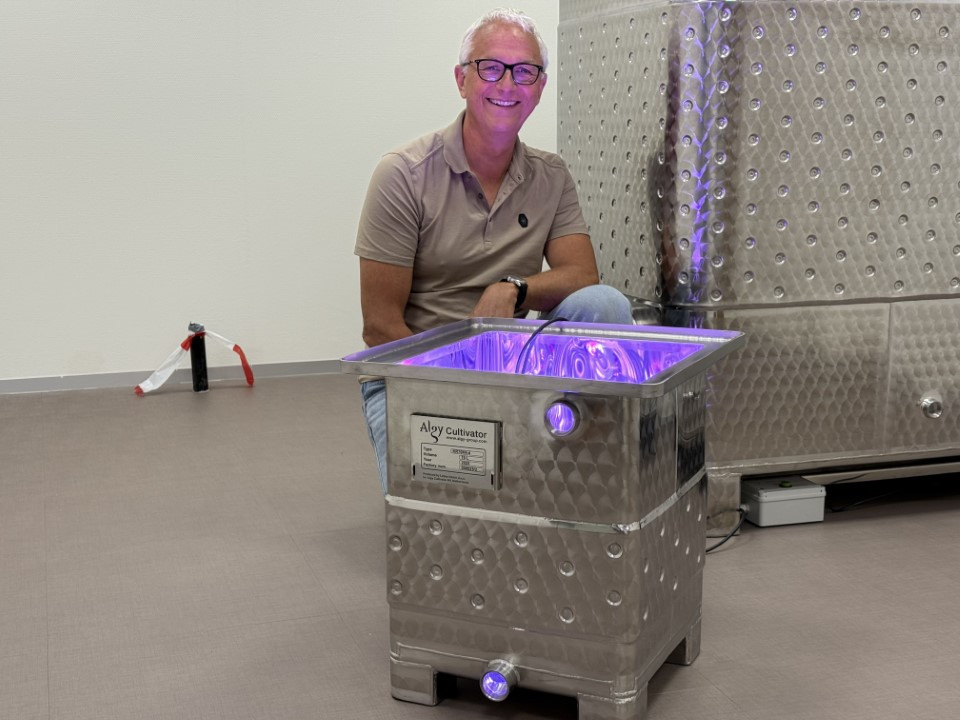
Joep de Vries
Op zondag 31 mei 2026 staat Groningen in het teken van sport, doorzettingsvermogen en betrokkenheid. Tussen alle lopers is ook het herkenbare roze van Vrienden Beatrix Kinderziekenhuis zichtbaar.
The LIFE Cooperative, part of the Northern Netherlands life sciences ecosystem at Campus Groningen, is organizing the Dutch Medicines Winter Afternoon together with FIGON on Thursday, 26 February. This fully booked event brings together leading scientists and industry experts to explore the latest developments in innovative medicines and advanced drug delivery. Read the full article as published by the LIFE Cooperative.National Attention for Sold-Out Dutch Medicines Winter Afternoon: Innovative Medicines and Advanced Drug Delivery Take Center Stage in Groningen Innovation in medicines takes center stage on Thursday, 26 February during the Dutch Medicines Winter Afternoon, an inspiring event organized by FIGON (Federation for Innovative Drug Research Netherlands) in collaboration with the LIFE Cooperative. “We are extremely proud of the strong line-up at this event, bringing together leading experts from science and industry to explore the frontiers of drug development. The fact that registrations are already fully booked underlines the great importance of this event for the life sciences ecosystem, and in particular for the Northern Netherlands,” says Ronald Hesse, Director of the LIFE Cooperative. The Dutch Medicines Winter Afternoon brings together scientists, innovators, and professionals from across the Netherlands for an afternoon of insights, knowledge exchange, and networking opportunities. The speaker line-up features experts from both academia and industry. This event is already fully booked. Interested in joining the waiting list? Please email: amber@lifecooperative.nlConnecting force The afternoon will be opened by Prof. Klaas Poelstra of the University of Groningen (RUG), Chair of FIGON, who will outline the importance of innovative drug development in the Netherlands. This will be followed by an introduction by Robert Hof on behalf of the LIFE Cooperative, highlighting the cooperative’s role as a connecting force within the regional ecosystem. The first session block before the break focuses on innovation in drug delivery systems. Rob Steendam (CTO, InnoCore) will discuss the development of long-acting SynBiosys® microspheres for controlled and sustained drug release. Jaap Wieling (CEO, PureIMS) will present the potential of dry-powder inhalation via the Cyclops® technology for both pulmonary and systemic indications. From an academic perspective, Prof. Marleen Kamperman (University of Groningen) will explore the potential of polyelectrolyte coacervates as innovative drug delivery platforms.Deep dive After the break, the focus shifts to advanced nanomedicines and clinical development strategies. Dr. Flávia Sousa (RUG) will present her work on polymer-based nanomedicines for the delivery of biotherapeutics to the brain. Dr. Ad Roffel (ICON plc, Groningen) will address mass balance and absolute bioavailability studies with ¹⁴C-labeled drugs in humans, an essential component of clinical drug development. Prof. Erik Frijlink (RUG) will reflect on the value of innovation within both established and advanced drug delivery systems, placing technological progress in a broader pharmaceutical context. Finally, Prof. Helder Santos (RUG) will demonstrate how nanomedicines are being used for RNA delivery in myocardial infarction repair, a promising development in cardiovascular therapy. “We are extremely proud of the strong line-up at this event, bringing together leading experts from science and industry to explore the frontiers of drug development. The fact that registrations are already fully booked underlines the great importance of this event for the life sciences ecosystem, and in particular for the Northern Netherlands." - Ronald Hesse, director LIFE CooperativeClosing and networking The afternoon will conclude with a contribution by Peter Ketelaar (LIFE Cooperative), followed by closing remarks from Prof. Klaas Poelstra. Participants will then have the opportunity to connect and continue discussions during the networking reception. Hesse looks forward to the event: “With this event, FIGON and the LIFE Cooperative underline the strength of collaboration between academia, industry, and clinical practice. The Dutch Medicines Winter Afternoon promises not only to be an inspiring afternoon, but also to provide momentum for further innovation and collaboration within the Northern Netherlands life sciences ecosystem.” Text: lifecooperative.nlPhotographer: Casper Maas
The master plan for the Healthy Ageing Campus has officially been approved! This marks an important step in developing the campus as a hub for knowledge, innovation, and collaboration. With a focus on greenery, health, and connection to the city, the campus will become a vibrant environment where research, education, healthcare, and business come together. The vision provides space for new laboratories, building renovations, meeting places, and closer collaboration between UMCG, RUG, and the business community. Read the whole article by the UMCG below.Green light for the Healthy Ageing Campus Master Plan On Wednesday, 18 February 2026, the Groningen City Council formally approved the master plan for the Healthy Ageing Campus. This is a major milestone, as the plan provides the framework for the campus’s further development and its integration with the surrounding area. At the end of last year, the University of Groningen (RUG), the University Medical Center Groningen (UMCG), and the City of Groningen presented an ambitious, future-proof plan for the campus. Shared ambitions have been translated into coherent spatial and programmatic guidelines for current and future developments. In other words: how much space is available for which functions on the campus, and where is the most suitable location for them? The renewed campus will: Provide space for knowledge, innovation, and collaboration, encouraging interaction between disciplines and people; Connect with the city, making the campus a natural part of Groningen life; Be a healthy and sustainable environment, with attention to greenery, physical activity, wellbeing, and a living environment that supports health; Be lively and accessible, bringing together living, working, research, studying, and healthcare.Next steps The master plan is not only a blueprint for the future, but also a concrete step toward further developing the current campus. Construction and renovation on the UMCG and RUG grounds are ongoing, and each project must now be assessed to determine what is possible. With the approval of this master plan, the way is cleared for follow-up decisions, including applying for demolition and building permits and further project development within the area. Upcoming projects include: The construction of the Central Laboratory for Diagnostics and Research (CLDR): a new laboratory building on the site of the former UCP building. This building will bring together various laboratories in one location to improve collaboration. Relocating laboratories from the Central Medical Complex is also necessary for the renovation and expansion of several hospital departments; Renovation and future-proofing of existing UMCG and RUG buildings, with attention to sustainability, flexibility, and integration with the heating/cooling system; Making the campus greener and more accessible, creating new meeting places and better connections to surrounding public spaces; Creating space for campus-related business activities, strengthening collaboration between UMCG, RUG, and the private sector.Municipality explores the future of DOT Initially, the master plan covered the area between Petrus Campersingel and Oostersingel, from Hanzeplein to the Oosterhamrikkanaal. In the newly approved plan, the Bodenterrein site has been separated, as the municipality is investigating the costs of possibly preserving DOT. More information on this will be available later this year. Read more about the Master Plan.Source text and pictures: umcg.nl