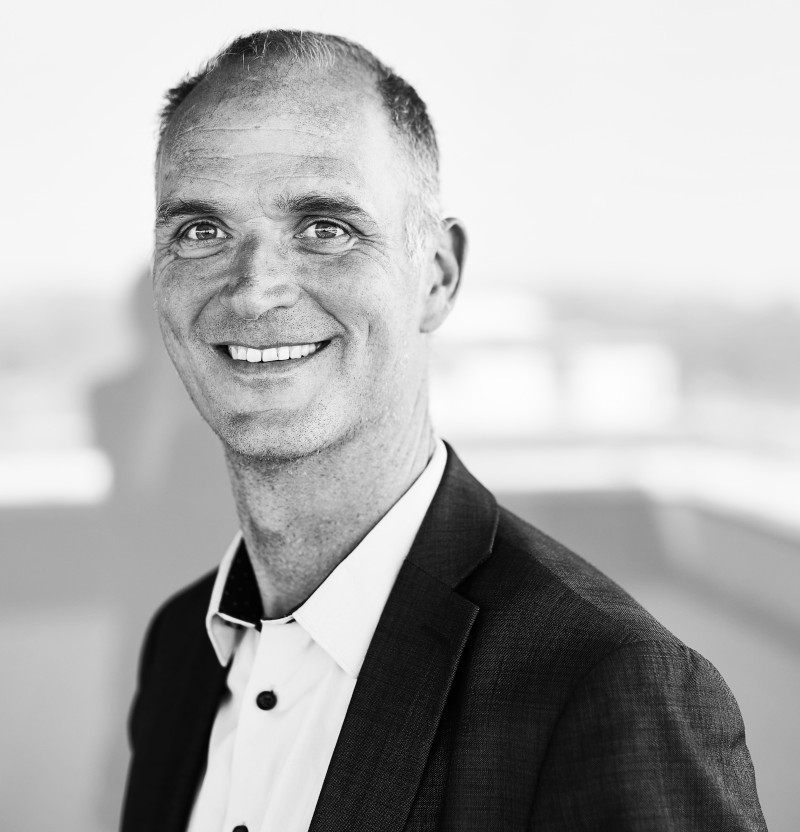
Campus resident Circolide is featured in the latest edition of Noordz. The article shows how science and entrepreneurship come together in an innovative product that makes a real difference.
Read the full article below.
Source: Dagblad van het Noorden. Photography: Jan Buwalda
Hundreds of start-ups are launched every year. Who are these entrepreneurs, what do they want, what are they willing to do to achieve it, and where are they heading? Start Me Up delves into a world full of promise, uncertainty, determination, vision and hard work.
Extracting building blocks for the chemical industry from biomass waste streams. That sounds like magic, but it’s actually happening right here in Groningen. There, Circolide combines various techniques to achieve an astonishing result: the production of sustainable building blocks for coatings that are superior to their fossil-based counterparts.
“Depending on the building block chosen, the coatings are harder, more wear-resistant, more scratch-resistant and more durable,” explains Hannah Feringa (CCO/COO). “And that’s essential. Creating a greener alternative that’s just as good, but more expensive, simply doesn’t work. Our solution costs a little more too, but you get more in return. As soon as production ramps up, the price will come down.”
"Bringing science to the market is simply wonderful"
Hannah Feringa
She founded the start-up two years ago together with Thomas Freese (CEO/CTO), Ton Vries (strategic advisor) and her father, Nobel Prize winner Ben Feringa (scientific advisor) from Paterswolde. “This company stems directly from his scientific quest for a sustainable alternative to acrylic. Within his research group, Thomas Freese and his colleagues conducted the research that led to the discovery of a molecule with the right properties. Thomas also had the drive to use that discovery to start a company and thus contribute to a more sustainable future.” Freese: “I was immediately enthusiastic when Ben came up with the idea of turning it into a business.”
It turns out that many more people share that enthusiasm. Pilot projects are underway at various companies, and the start-up has now raised a million euros for further development. “The timing is right,” says Thomas Freese. Hannah Feringa agrees. “The industry is constantly looking for innovative solutions that are both better and greener, and we offer just such an alternative. What’s more, we can help strengthen Europe’s position – and that of our farmers – in using biomass to produce materials. An added benefit is that Circolide’s process uses waste streams, meaning there is no competition with the food industry.”
What Circolide does is use furfural, a molecule extracted from biomass waste streams. By causing this molecule to react under intense red light, a new molecule is created: butenolide. And this can be used as a key building block for the production of coatings. Freese: “What we produce can look like a white powder, but we can also supply it as a liquid, which the industry can then process further. We are also able to adjust the properties of the molecule – different colours, water resistance, hardness. We are constantly researching this so that we can develop what the market demands.”
Hannah Feringa: “AkzoNobel is our strategic partner. Together we are conducting tests to develop better products. But we also need SMEs to launch new coatings, so that we can gradually ramp up production.” The start-up will soon be producing 10 kilos of the product per day, a figure that needs to rise rapidly to 200 kilos. To achieve this, further funding will need to be raised next year. The provisional goal is a pilot plant – likely in the province of Groningen – capable of producing 200 to 500 kilos per day.
Meanwhile, the start-up is trying to sign up as many customers as possible to test the product and help further develop it. “That’s what I spend a lot of time on, yes,” says Hannah Feringa. “Convincing companies, raising funds and strengthening the ecosystem. My name? Yes, I don’t think it works against me if they know my father is a Nobel Prize winner. He still plays an important role as an advisor. This company is also the result of decades of research by him and his research groups. He was already publishing on the subject back in the 1970s. I’ve seen what kind of staying power you need to really achieve something. Science, as he practises it, has a lot in common with top-level sport.”
Hannah herself always knew she wanted to be an entrepreneur. “I’ve done and seen a lot and knew: the time will come eventually. That was two years ago. I really feel at home here. Bringing science to the market is simply wonderful. Especially when it’s good for the planet.”
Freese also sees opportunities for agriculture and regional supply chains. “How wonderful would it be if, one day, agricultural waste from a farmer in the northern Netherlands were processed into paint for the Martinikerk?” For him, contributing to the fight against climate change is also his top priority. “Every year, nine million tonnes of acrylic are produced from fossil fuels. There is another way, and we’re showing that.”
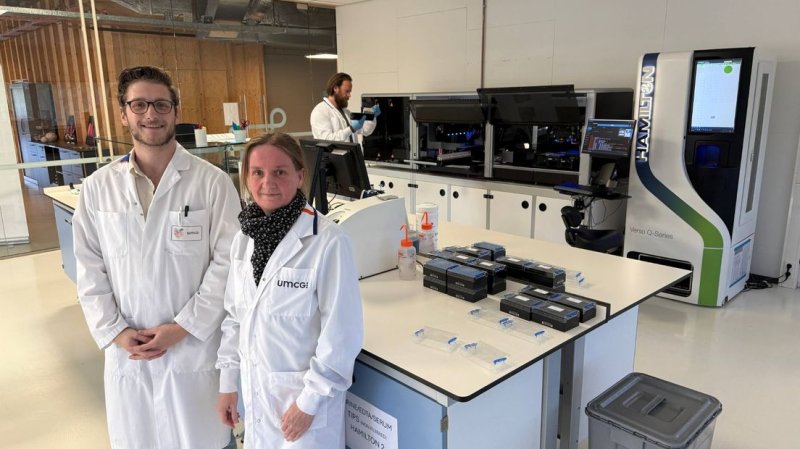
The large-scale Lifelines population study is inviting new participants for the first time in twenty years. The study is seeking around 16,000 relatives of existing participants. This expansion has been made possible by a grant from the National Programma Groningen (NPG).
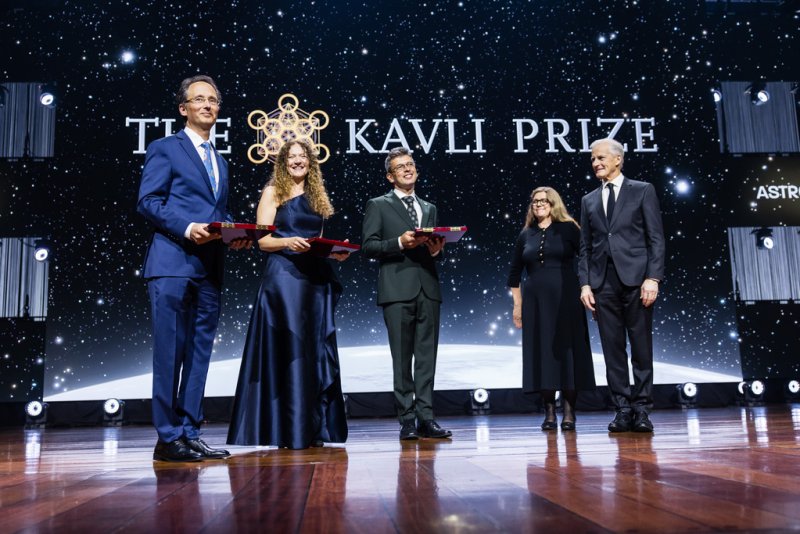
The 2026 Kavli Prize was awarded last week. Alongside the Nobel Prize, the Kavli Prize is regarded as one of the highest honours in science and is awarded every two years by the Norwegian Academy of Science and Letters.
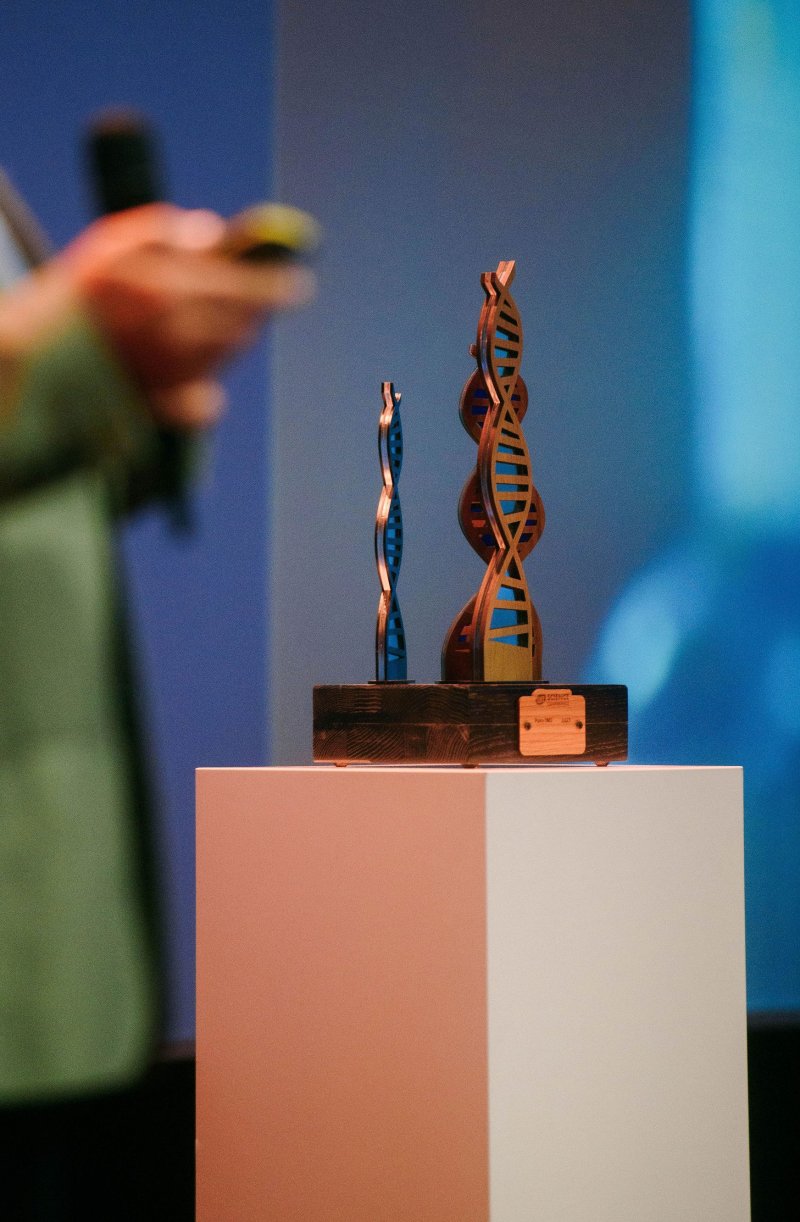
Who is developing the most impactful innovation in Life Sciences & Health in the Northern Netherlands? Five companies are in the running for the LIFE Science Innovation Award 2026: Flux Robotics, Limosa Immunodiagnostics, SPCTR, MimeCure and GlycanScan International. The nominees will present their innovations on Tuesday 22 September during the fifth edition of the LIFE Science Conference in Groningen. An independent jury will select the winner, who will receive a €10,000 cash prize.