Biokinetica Establishes Itself at Campus Groningen: Innovative Phase I Research Closer to Home

Mo 29 September 2025

Biokinetica, an internationally recognized clinical research company with Polish roots, opened a new site at Campus Groningen in June 2025. The company specializes in complex early-phase studies, such as First in Human (FiH), Proof of Concept, QTc measurements, CSF sampling, and other clinical pharmacology trials involving both healthy volunteers and patients. Ronald Koning, Chief Strategic Advisor at Biokinetica, shares insights into his role and the company’s plans in the Netherlands.

“Biokinetica operates a Phase I clinic in Warsaw, part of a cardiology hospital with fifty beds,” says Koning. “It’s a state-of-the-art facility with direct links to intensive care. From my previous work in Groningen, I already knew the Biokinetica team well. When I left ICON Drug Research, the step to join them felt very natural.”

As Chief Strategic Advisor, Koning supports the management on European expansion, study protocols, and new technologies. “My role is mainly about bringing expertise and capabilities from larger research organizations, into Biokinetica. In Groningen, this means working closely with UMCG and local partners like CTC Netherlands and Delphinium on the Healthy Ageing Campus, so we can secure approvals quickly and scale research volumes efficiently.”

A Smart Combination: The Netherlands and Poland

Biokinetica’s model combines the strengths of the Netherlands and Poland. “In the Netherlands, review of a Phase I study protocol by the independent ethics committee takes a maximum of 42 days, which is very fast compared to other countries.”

At the same time, Warsaw provides access to large groups of healthy volunteers (around 70% of research participants) and patients, particularly in oncology and cardiology, who are eager to join early-phase studies. “In Poland, patients have less access to innovative treatments, so they are very motivated to participate,” Koning explains. “Their involvement gives them hope, even if we’re still in the early stages.”

The model therefore combines rapid study initiation in the Netherlands with high volumes of healthy volunteers and patients in Warsaw. “It requires a bit more logistics for a sponsor eager to test a drug, but the time savings are significant,” Koning adds.
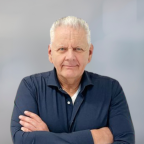
Ronald Koning
"Our goal is to make high-quality clinical studies available closer to home, while leveraging the strengths of our Polish clinic."

Ronald Koning Chief Strategic Advisor bij Biokinetica

Ambitions for Groningen and Europe

The new office at the Biotech Center on the Healthy Ageing Campus, next to UMCG, currently serves as a coordination hub. What are Biokinetica’s ambitions in Groningen over the coming years? Koning elaborates: “Right now, we’re presenting our model at U.S. conferences and expect to launch our first Dutch studies next year. Mid-term, we’re looking at further European expansion: Belgium, Scandinavia, or Germany, depending on regulations and opportunities.”

Biokinetica also aims to strengthen ties with academic institutions. A Letter of Intent with UMCG has been signed to develop joint research projects and educational initiatives. “The Healthy Ageing Campus offers an excellent ecosystem, connecting us with other biotech companies and research institutions, and helping us grow our network in the Netherlands.”

Ronald Koning
"De Healthy Ageing Campus biedt een uitstekend ecosysteem voor verbindingen met andere biobedrijven en onderzoeksinstellingen, waardoor we ons netwerk in Nederland kunnen uitbreiden."

Ronald Koning Chief Strategic Advisor bij Biokinetica

High-Quality Facilities and Faster Research

Koning emphasizes that the Warsaw clinic is fully modern and globally recognized. The U.S. Food and Drug Administration (FDA) has inspected the site twice without a single remark. “There’s sometimes a perception that Eastern European facilities are less advanced, but Biokinetica proves otherwise. Our facilities are world-class, and that’s something I want to highlight.”

With a strategic base at Campus Groningen, strong ties to UMCG, and collaborations across Europe, Biokinetica aims to accelerate Phase I research and improve patient access to innovative therapies. “Our goal is to make high-quality clinical studies available closer to home, while leveraging the strengths of our Polish clinic,” Koning concludes.

Want to learn more?

Curious about Biokinetica? Join the Campus Café on Thursday, October 16, where Ronald Koning will present a pitch about the company (free participation, registration link). Visit [https://biokinetica.com/en/] for more information. Fancy a coffee with Ronald Koning? Reach out via ronald.koning@biokinetica.com.

Text: Campus Groningen
Pictures: Biokinetica
Maybe also interesting for you

Th 12 March 2026

“Every euro raised goes directly to the children.”

Op zondag 31 mei 2026 staat Groningen in het teken van sport, doorzettingsvermogen en betrokkenheid. Tussen alle lopers is ook het herkenbare roze van Vrienden Beatrix Kinderziekenhuis zichtbaar.

Mo 23 February 2026

Groningen hosts the Dutch Medicines Winter Afternoon full of innovation

The LIFE Cooperative, part of the Northern Netherlands life sciences ecosystem at Campus Groningen, is organizing the Dutch Medicines Winter Afternoon together with FIGON on Thursday, 26 February. This fully booked event brings together leading scientists and industry experts to explore the latest developments in innovative medicines and advanced drug delivery. Read the full article as published by the LIFE Cooperative.National Attention for Sold-Out Dutch Medicines Winter Afternoon: Innovative Medicines and Advanced Drug Delivery Take Center Stage in Groningen Innovation in medicines takes center stage on Thursday, 26 February during the Dutch Medicines Winter Afternoon, an inspiring event organized by FIGON (Federation for Innovative Drug Research Netherlands) in collaboration with the LIFE Cooperative. “We are extremely proud of the strong line-up at this event, bringing together leading experts from science and industry to explore the frontiers of drug development. The fact that registrations are already fully booked underlines the great importance of this event for the life sciences ecosystem, and in particular for the Northern Netherlands,” says Ronald Hesse, Director of the LIFE Cooperative. The Dutch Medicines Winter Afternoon brings together scientists, innovators, and professionals from across the Netherlands for an afternoon of insights, knowledge exchange, and networking opportunities. The speaker line-up features experts from both academia and industry. This event is already fully booked. Interested in joining the waiting list? Please email: amber@lifecooperative.nlConnecting force The afternoon will be opened by Prof. Klaas Poelstra of the University of Groningen (RUG), Chair of FIGON, who will outline the importance of innovative drug development in the Netherlands. This will be followed by an introduction by Robert Hof on behalf of the LIFE Cooperative, highlighting the cooperative’s role as a connecting force within the regional ecosystem. The first session block before the break focuses on innovation in drug delivery systems. Rob Steendam (CTO, InnoCore) will discuss the development of long-acting SynBiosys® microspheres for controlled and sustained drug release. Jaap Wieling (CEO, PureIMS) will present the potential of dry-powder inhalation via the Cyclops® technology for both pulmonary and systemic indications. From an academic perspective, Prof. Marleen Kamperman (University of Groningen) will explore the potential of polyelectrolyte coacervates as innovative drug delivery platforms.Deep dive After the break, the focus shifts to advanced nanomedicines and clinical development strategies. Dr. Flávia Sousa (RUG) will present her work on polymer-based nanomedicines for the delivery of biotherapeutics to the brain. Dr. Ad Roffel (ICON plc, Groningen) will address mass balance and absolute bioavailability studies with ¹⁴C-labeled drugs in humans, an essential component of clinical drug development. Prof. Erik Frijlink (RUG) will reflect on the value of innovation within both established and advanced drug delivery systems, placing technological progress in a broader pharmaceutical context. Finally, Prof. Helder Santos (RUG) will demonstrate how nanomedicines are being used for RNA delivery in myocardial infarction repair, a promising development in cardiovascular therapy. “We are extremely proud of the strong line-up at this event, bringing together leading experts from science and industry to explore the frontiers of drug development. The fact that registrations are already fully booked underlines the great importance of this event for the life sciences ecosystem, and in particular for the Northern Netherlands." - Ronald Hesse, director LIFE CooperativeClosing and networking The afternoon will conclude with a contribution by Peter Ketelaar (LIFE Cooperative), followed by closing remarks from Prof. Klaas Poelstra. Participants will then have the opportunity to connect and continue discussions during the networking reception. Hesse looks forward to the event: “With this event, FIGON and the LIFE Cooperative underline the strength of collaboration between academia, industry, and clinical practice. The Dutch Medicines Winter Afternoon promises not only to be an inspiring afternoon, but also to provide momentum for further innovation and collaboration within the Northern Netherlands life sciences ecosystem.” Text: lifecooperative.nlPhotographer: Casper Maas

Th 19 February 2026

New Master Plan for the Healthy Ageing Campus Officially Approved

The master plan for the Healthy Ageing Campus has officially been approved! This marks an important step in developing the campus as a hub for knowledge, innovation, and collaboration. With a focus on greenery, health, and connection to the city, the campus will become a vibrant environment where research, education, healthcare, and business come together. The vision provides space for new laboratories, building renovations, meeting places, and closer collaboration between UMCG, RUG, and the business community. Read the whole article by the UMCG below.Green light for the Healthy Ageing Campus Master Plan On Wednesday, 18 February 2026, the Groningen City Council formally approved the master plan for the Healthy Ageing Campus. This is a major milestone, as the plan provides the framework for the campus’s further development and its integration with the surrounding area. At the end of last year, the University of Groningen (RUG), the University Medical Center Groningen (UMCG), and the City of Groningen presented an ambitious, future-proof plan for the campus. Shared ambitions have been translated into coherent spatial and programmatic guidelines for current and future developments. In other words: how much space is available for which functions on the campus, and where is the most suitable location for them? The renewed campus will: Provide space for knowledge, innovation, and collaboration, encouraging interaction between disciplines and people; Connect with the city, making the campus a natural part of Groningen life; Be a healthy and sustainable environment, with attention to greenery, physical activity, wellbeing, and a living environment that supports health; Be lively and accessible, bringing together living, working, research, studying, and healthcare.Next steps The master plan is not only a blueprint for the future, but also a concrete step toward further developing the current campus. Construction and renovation on the UMCG and RUG grounds are ongoing, and each project must now be assessed to determine what is possible. With the approval of this master plan, the way is cleared for follow-up decisions, including applying for demolition and building permits and further project development within the area. Upcoming projects include: The construction of the Central Laboratory for Diagnostics and Research (CLDR): a new laboratory building on the site of the former UCP building. This building will bring together various laboratories in one location to improve collaboration. Relocating laboratories from the Central Medical Complex is also necessary for the renovation and expansion of several hospital departments; Renovation and future-proofing of existing UMCG and RUG buildings, with attention to sustainability, flexibility, and integration with the heating/cooling system; Making the campus greener and more accessible, creating new meeting places and better connections to surrounding public spaces; Creating space for campus-related business activities, strengthening collaboration between UMCG, RUG, and the private sector.Municipality explores the future of DOT Initially, the master plan covered the area between Petrus Campersingel and Oostersingel, from Hanzeplein to the Oosterhamrikkanaal. In the newly approved plan, the Bodenterrein site has been separated, as the municipality is investigating the costs of possibly preserving DOT. More information on this will be available later this year. Read more about the Master Plan.Source text and pictures: umcg.nl